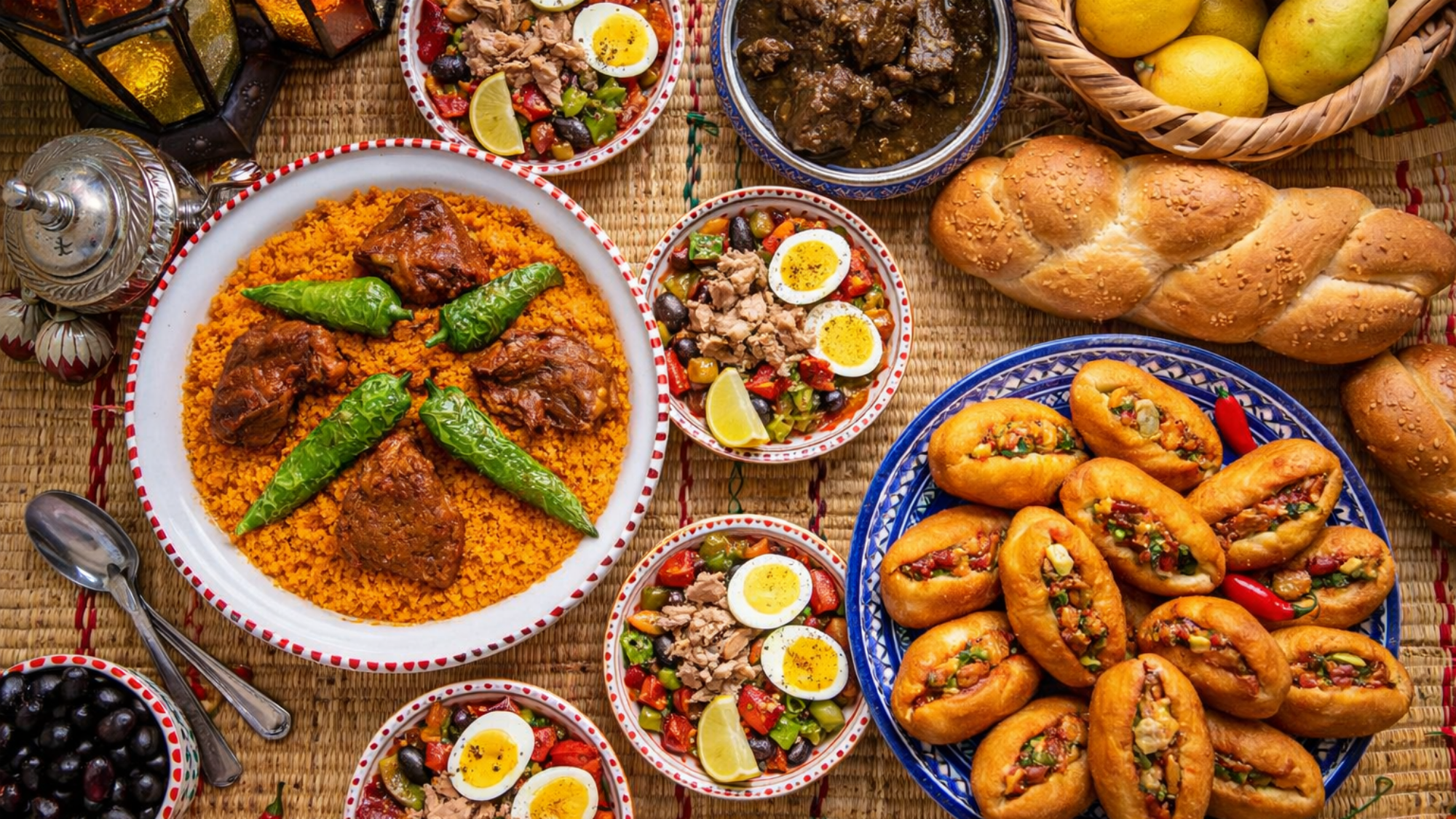
Nowadays, our ways of traveling have profoundly changed. We are no longer simply looking to discover iconic monuments and spectacular landscapes. Instead, contemporary travelers aspire to live an authentic experience by wearing local clothes and savoring the unique flavors that distinguish one country’s cuisine from another, making local gastronomy a gateway to a country’s culture. So, let’s set off together to discover the culinary richness of Tunisia and the adventures awaiting you on your next trip.
Traditional Dishes: The Soul of Tunisian Gastronomy
Couscous: Heritage, Rituals, and Regional Variations
Couscous is a common dish in the Maghreb, but each country has its own unique way of preparing it. In Tunisia, this meal holds great importance—it’s the recipe that brings Tunisian families together every Sunday and the one used to celebrate our weddings. So, what is its specificity compared to other countries?
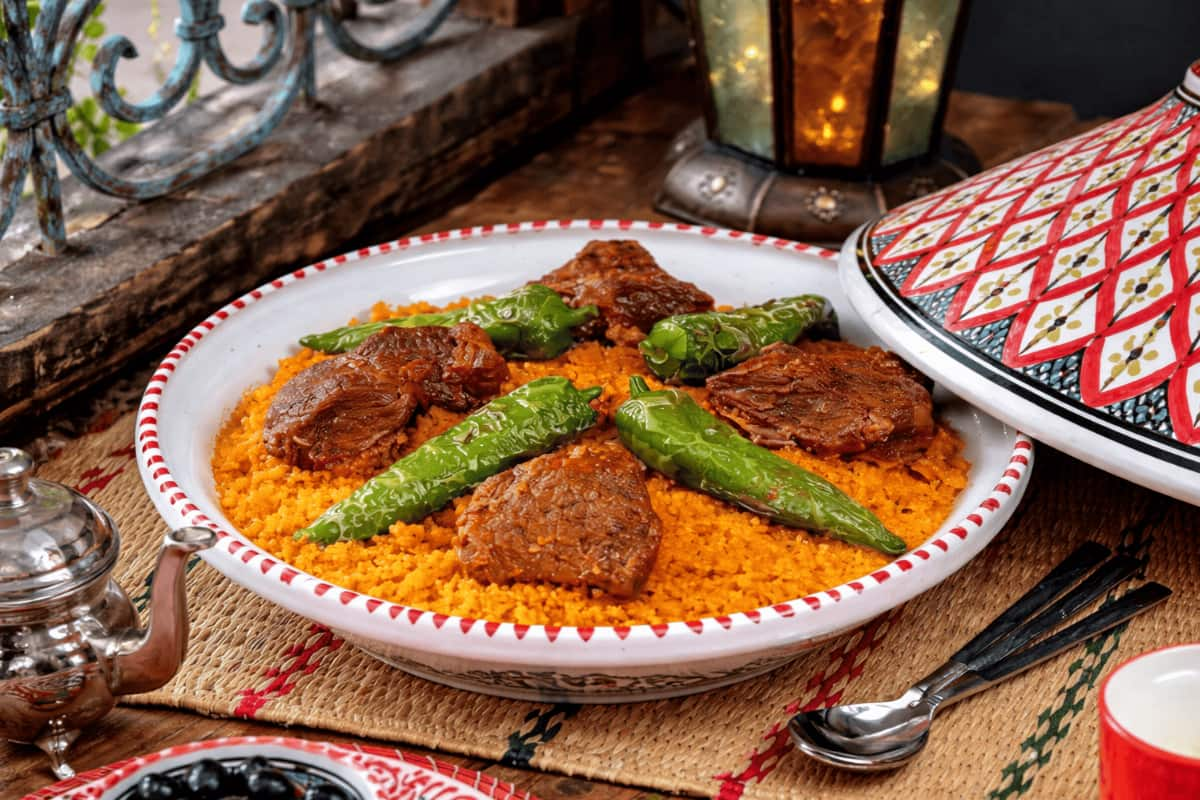
Prepared with care and tradition, Tunisian couscous starts with hand-rolled wheat semolina, lightly oiled and moistened before being steamed in the famous keskes. Meanwhile, a delicious sauce called marqa simmers gently with a variety of vegetables such as potatoes, onions, and others depending on the season, spiced with fragrant spices and meat, fish, or chicken depending on the region. Once the semolina is light and fluffy, it is mixed with the sauce to create a flavorful, colorful, and rich dish. More than just a meal, couscous is a symbol of conviviality and a moment of sharing deeply rooted in Tunisian culture.
Traditional Tunisian couscous topped with tender meat and green peppers, served in a classic ceramic dish.
Salade Mechouia is a staple of Tunisian cuisine—simple, tasty, and steeped in history. It finds its origins in Arab-Andalusian culinary heritage, brought by communities who settled in the Cap Bon region after the fall of the Kingdom of Granada in 1492. These settlers introduced new agricultural practices and New World vegetables like tomatoes and peppers, which later became the heart of this specialty.
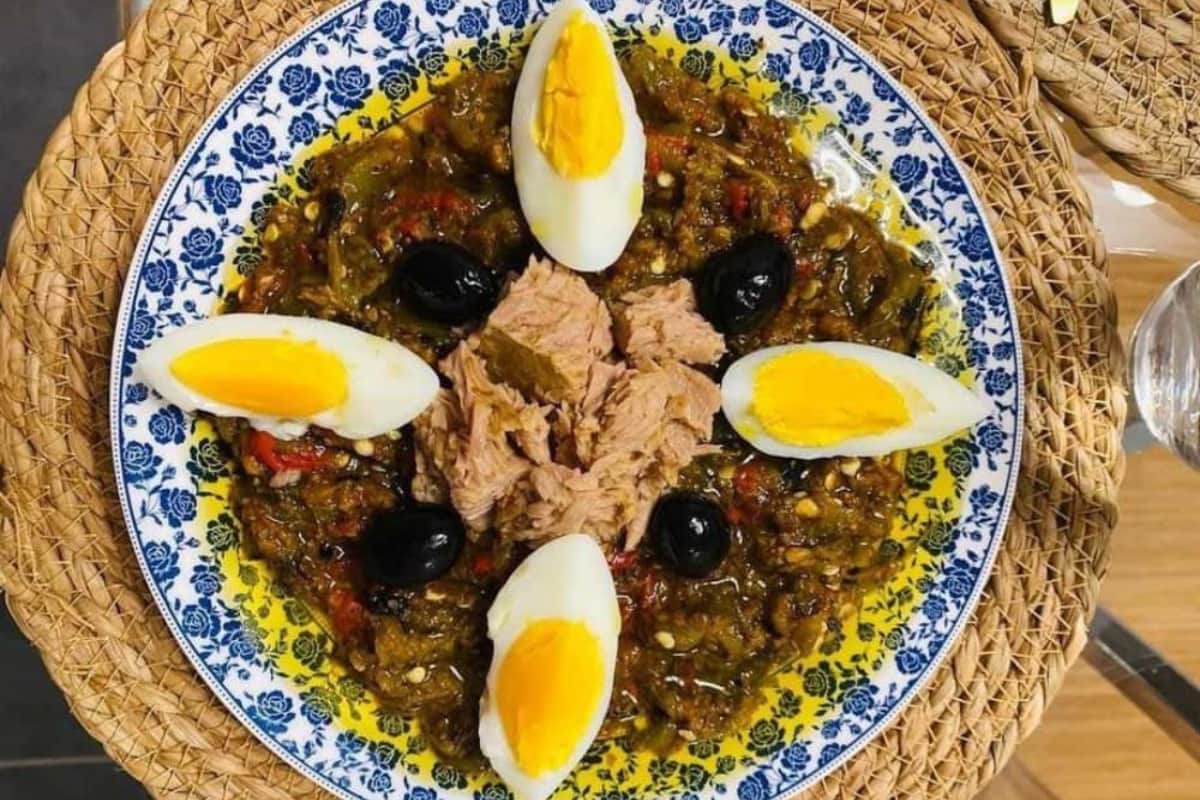
Prepared from peppers, tomatoes, eggplants, and garlic slowly grilled over charcoal, mechouia is distinguished by its intense smoky aromas. Once crushed, the vegetables are seasoned with salt, black pepper, and caraway, then generously drizzled with olive oil. An indispensable part of Tunisian tables, it can be enjoyed on its own or integrated into popular street foods. For the most authentic experience, it is best paired with the famous tabouna bread.
Smoky mechouia salad made from grilled peppers, tomatoes and olive oil, a classic Tunisian appetizer.
From Pan to Plate: The Simple Magic of Tunisian Chakchouka
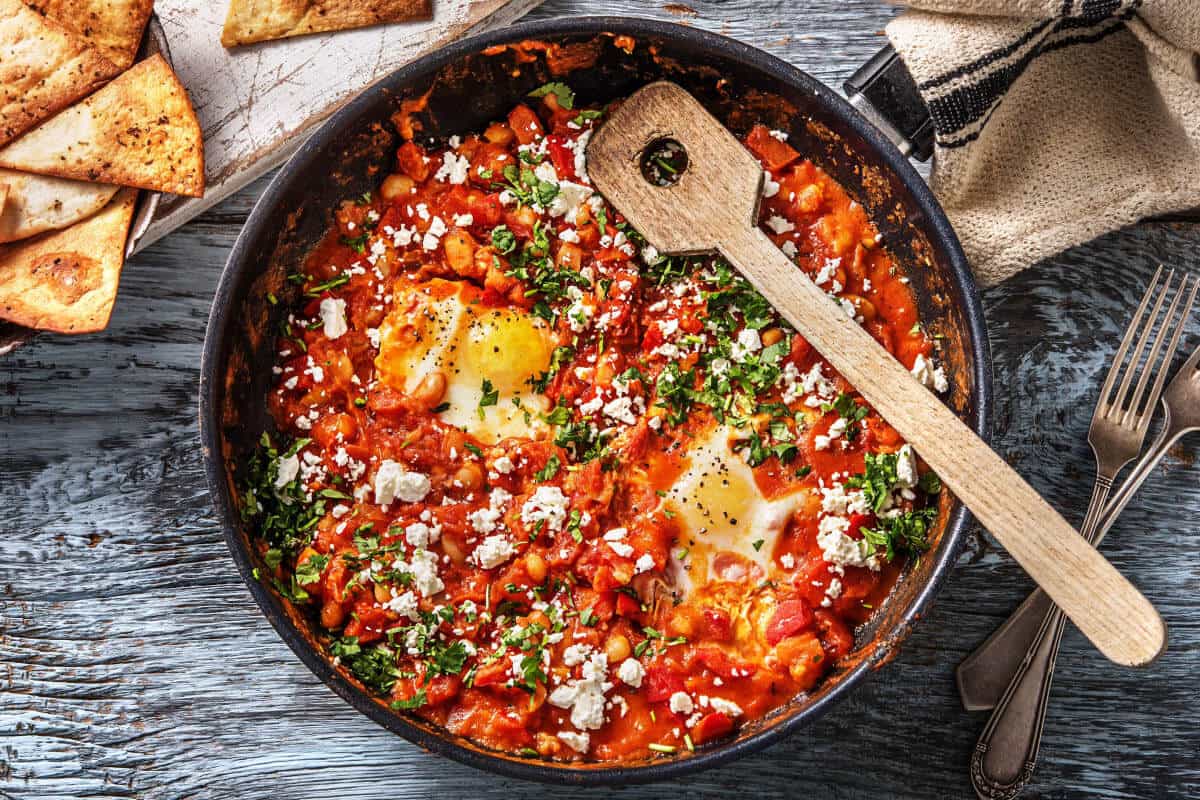
Chakchouka is a traditional Tunisian dish appreciated for its simplicity and rich flavors. It is prepared with tomatoes, peppers, and onions simmered in olive oil, seasoned with garlic, paprika, and sometimes a bit of harissa to enhance the taste. Eggs are then cracked directly into the sauce and cooked gently until they reach a creamy texture. Eaten hot and often accompanied by bread for dipping, it is a popular meal for lunch or dinner and an integral part of modern Tunisian cooking.
Chakchouka simmered with tomatoes, peppers and eggs, a comforting and flavorful Tunisian dish.
The Dark Stew of Tunisia: A First-Timer's Guide to Mloukhia
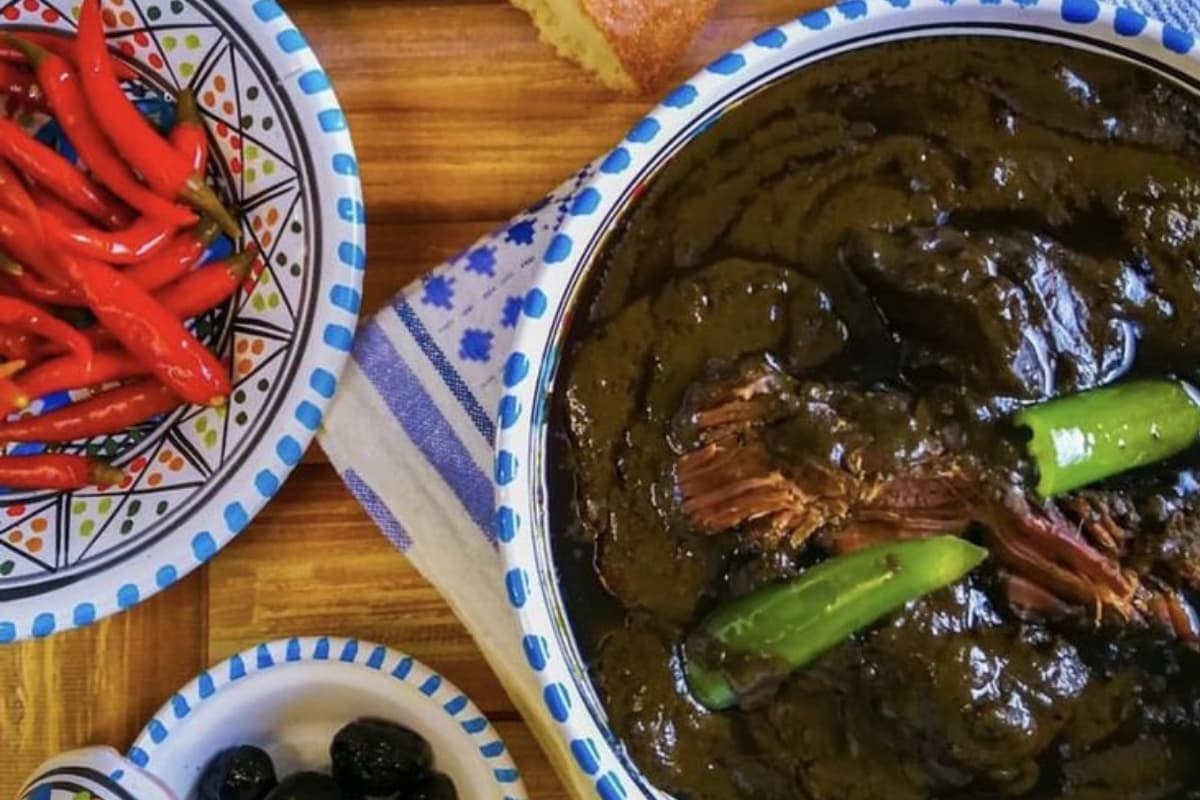
Mloukhia, one of the most representative dishes of Tunisian cuisine, is prepared from dried jute leaf powder, cooked for a long time at least five hours—with olive oil and meat. Its dark shades and particular texture may be surprising at first glance, but its powerful aroma and deep flavors give you a desire to taste it and uncover the secret behind its success in Tunisia.
Mloukhia slowly cooked for hours, one of the most iconic and deeply flavored Tunisian dishes.
Tunisian Street Food: A Tasty and Living Heritage
A Bite of History: The Story Behind the Tunisian Fricassé
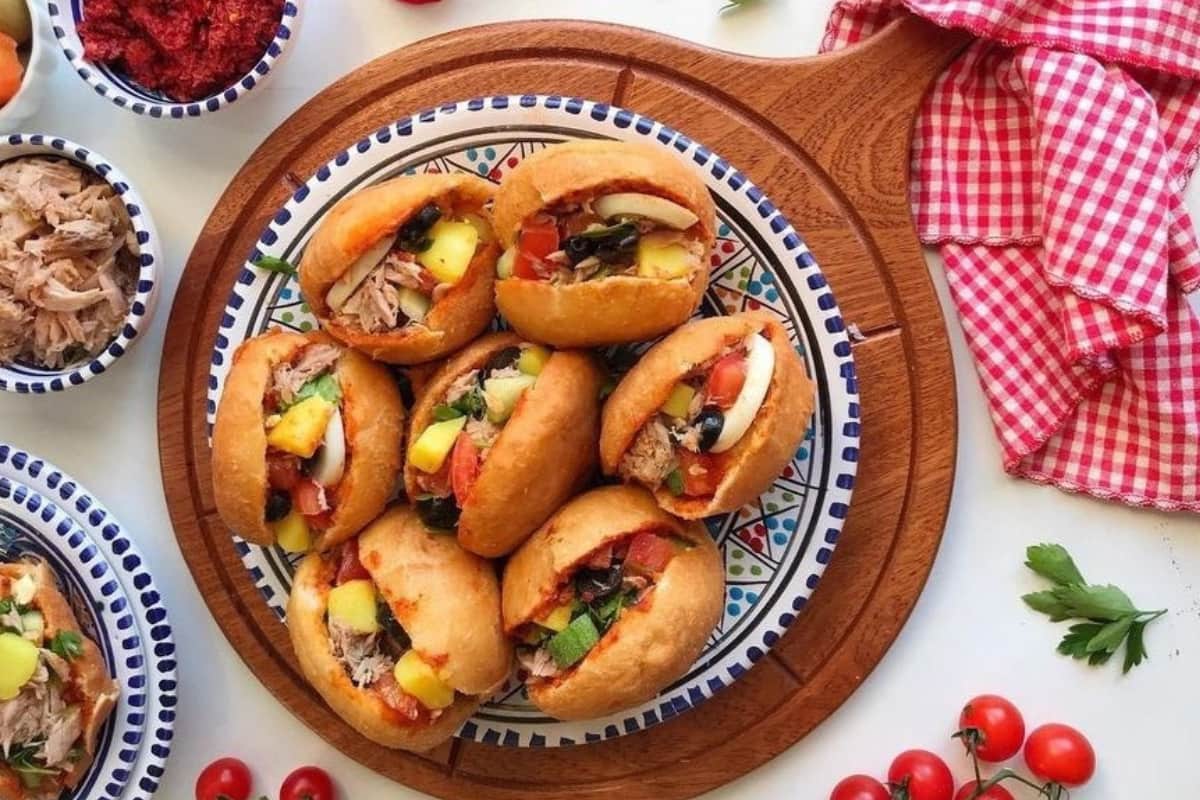
The Tunisian fricassé is much more than a simple snack; it’s a true institution of street food, born from culinary ingenuity and a story of resourcefulness. Originally, in the 19th century, a woman from a Jewish community in Tunisia had prepared many sweet donuts for guests who ultimately did not come. Rather than wasting them, she had the idea to transform them into a savory version: she split them and filled them with whatever she had on hand. This first “combo” was an immediate success, and from generation to generation, the recipe was passed down and perfected until achieving a 100% flavorful mix. Today, the fricassé is traditionally filled with a gourmet mixture of tuna, mashed potatoes, hard-boiled eggs, olives, and harissa, making it a staple of Tunisian street cuisine.
Tunisian fricassé filled with tuna, potatoes, eggs and harissa, a must-try street food.
A Legend in Every Bite: The Story of the Casse-Croûte Tounsi
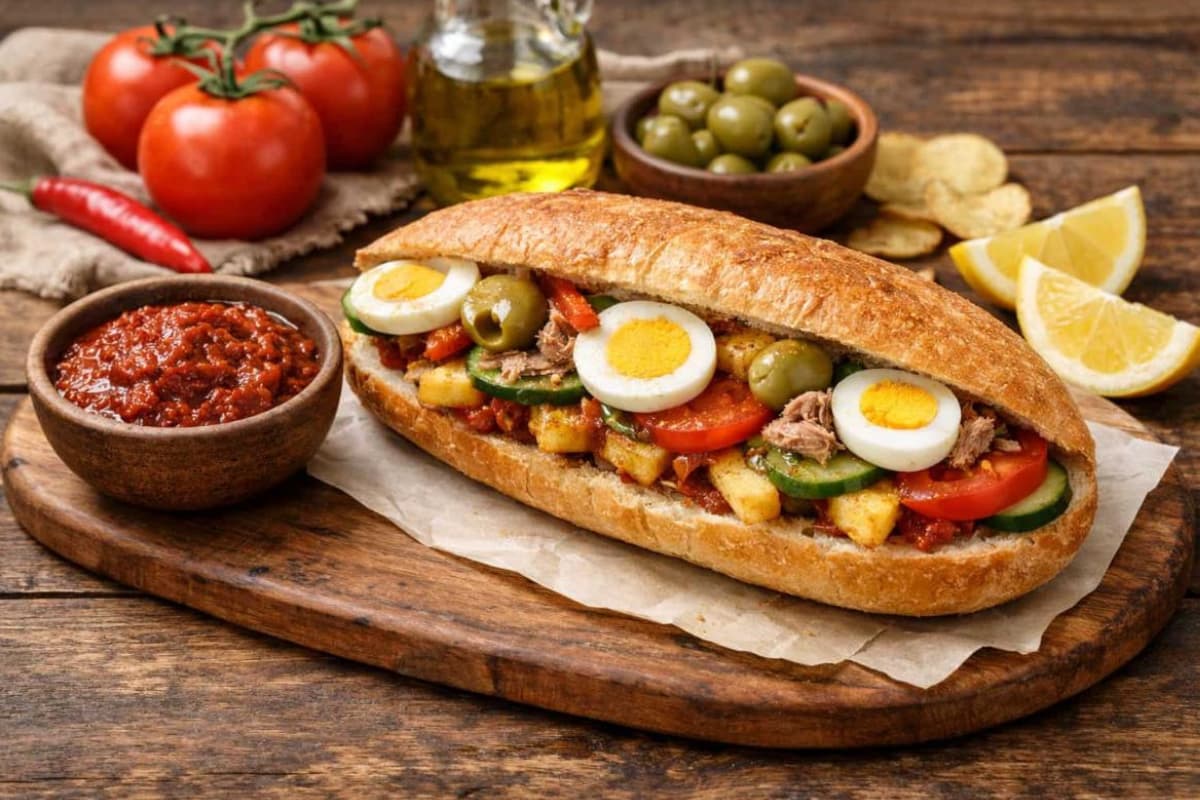
The Casse-croûte Tounsi, nicknamed the “Tunisian sandwich,” is a true symbol of local street food. Born by chance at the end of the 19th century thanks to Banoun, a Jewish beggar from Tunisia, this sandwich started modestly with bread and an egg given by a benefactor. Quickly, he had the idea to add a new ingredient each day: onion, chili pepper, potato, harissa… His creation attracted the attention of the locals and quickly became famous, leading him to open his first shop. Today, the Casse-croûte Tounsi consists of a half-baguette generously filled with: a crunchy Tunisian salad made from tomatoes, cucumbers, peppers, and onions, tuna, olives, and of course, a drizzle of harissa to spice it all up. It can also be enjoyed as a “plate,” offering a must-try classic for all lovers of Tunisian flavors.
Casse-croûte tounsi, the iconic Tunisian sandwich packed with fresh salad and bold flavors.
Breakfast or Lunch? The Two Faces of Tunisia's Mlawi Bread
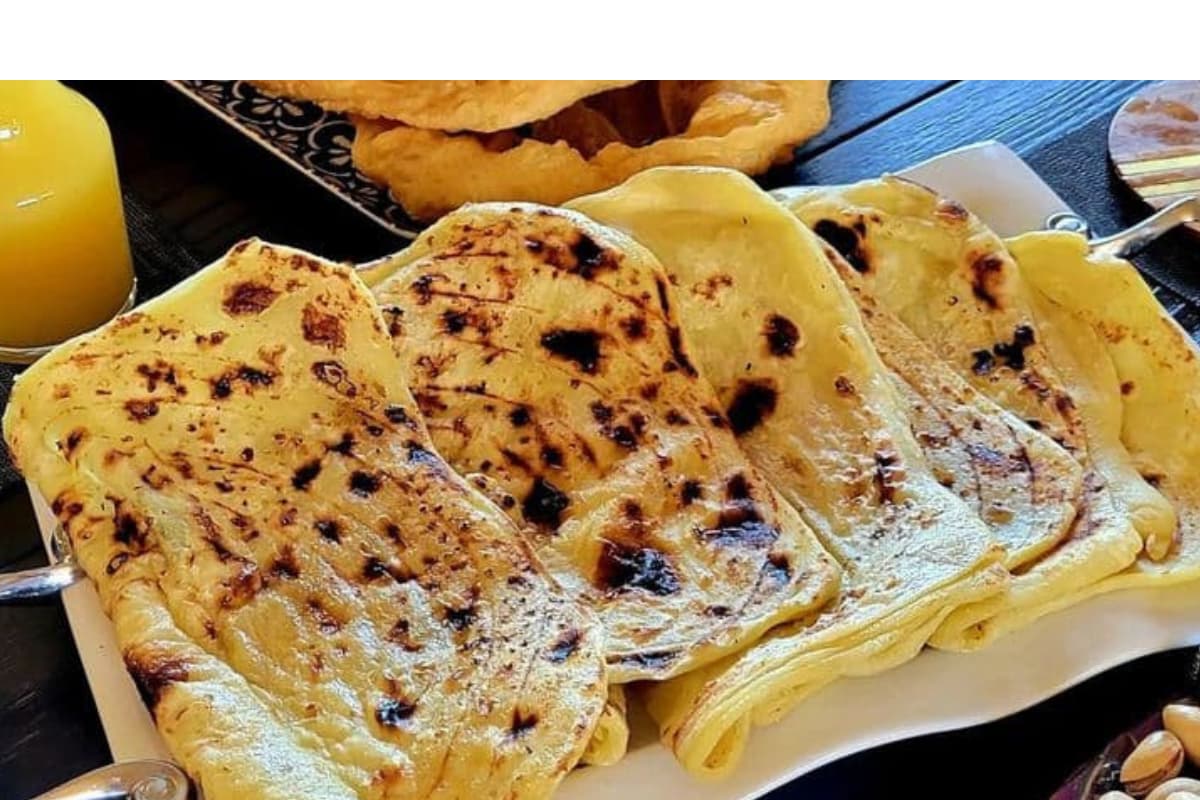
The Mlawi Sandwich is an essential Tunisian fast food, showcasing the famous homemade Mlawi bread. Originating from popular neighborhoods, this thin and soft bread is made from fine semolina, flour, olive oil, warm water, and salt. Its flexible a texture makes it perfect to eat plain with honey and olive oil for breakfast, or as a gourmet sandwich. In its savory version, the Mlawi is generously filled: harissa to enhance the flavors, spreadable cheese, tuna, and sliced hard-boiled egg, creating a tasty and complete snack, ideal for a meal on the go.
Mlawi, a versatile Tunisian flatbread enjoyed both sweet with honey and savory as a street food sandwich.
The Winter Warmer: How to Eat Lablebi Like a True Tunisian
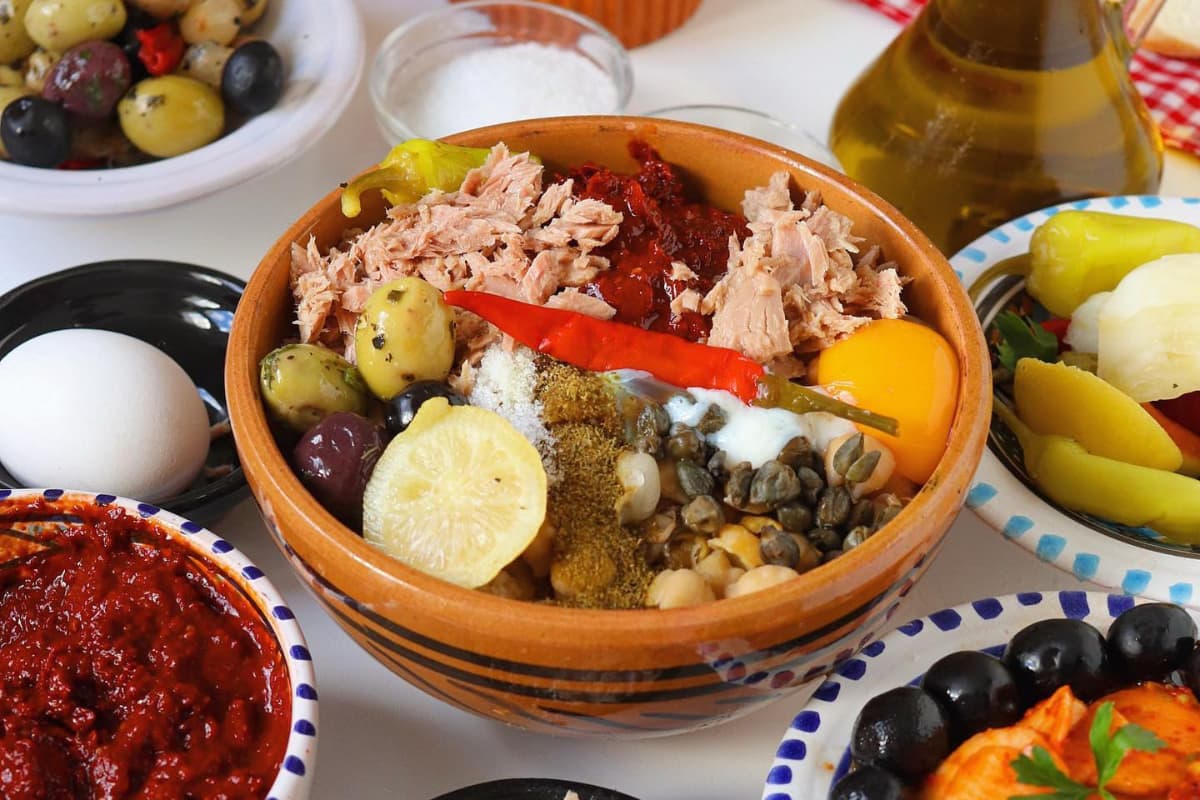
This is a Tunisian specialty made from chickpeas cooked in a broth flavored with cumin, salt, and paprika. It is usually enjoyed over slices of stale bread that soak up the broth, forming a rich and comforting consistency. We often tend to enhance the flavor by adding olive oil, harissa, a poached egg before eating, and tuna for more delight. Very popular in street food stalls, lablabi is especially consumed in winter, providing warmth and energy while remaining affordable and accessible to all.
Warm and comforting lablabi made with chickpeas, cumin and olive oil, a winter favorite in Tunisia.
Tunisian cuisine is much more than an assembly of flavors: it is an immersion into the heart of a warm, authentic culture deeply attached to its traditions. From couscous, Salade Mechouia, chakchouka, to fricassé and mlawi, each dish tells a unique story that plunges you into the soul of the country and invites you to live an experience full of sharing and discoveries.
So, if you wish to live this culinary experience up close and savor these specialties at their source, Open Tunisia accompanies you on a journey rich in discoveries and encounters.