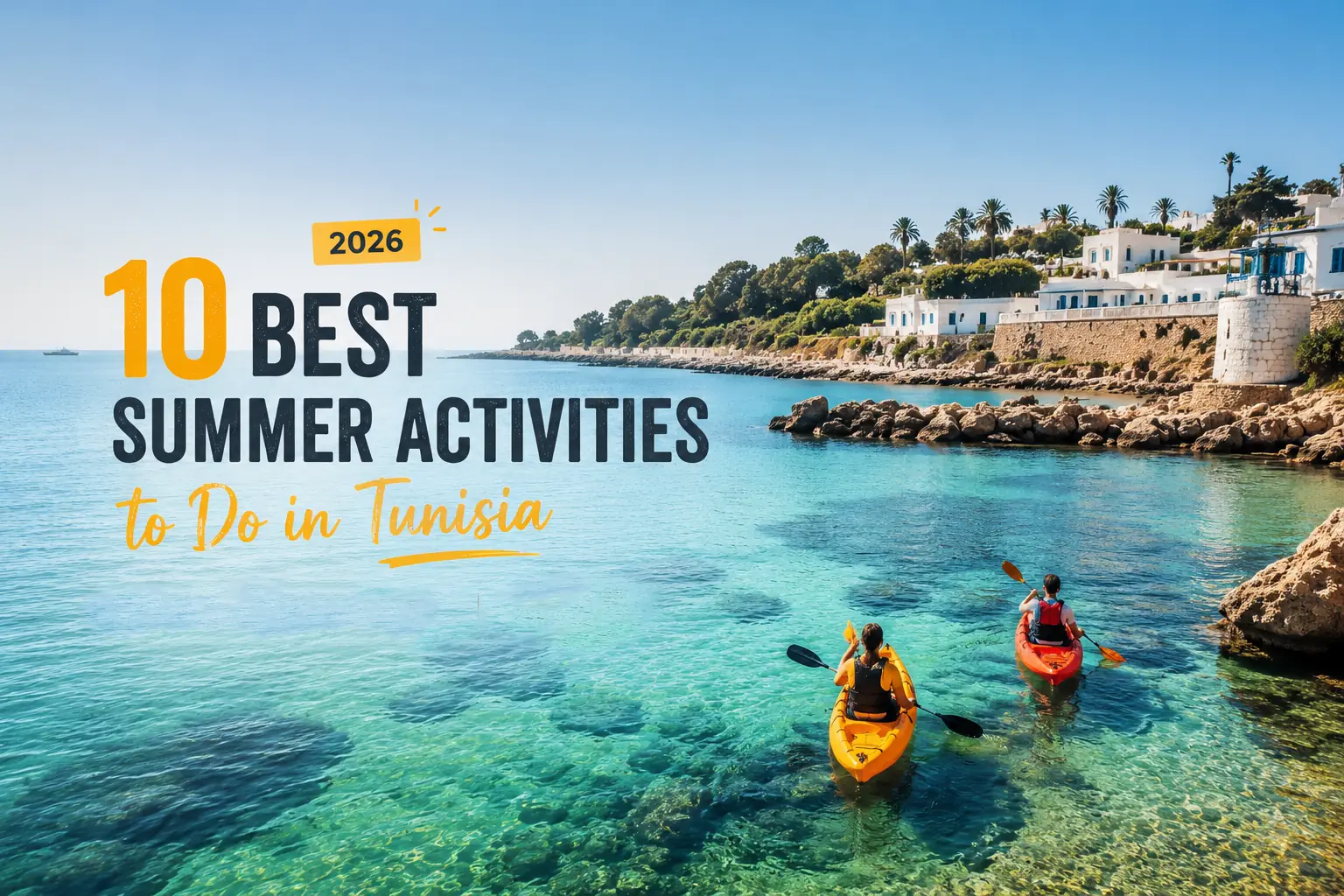
Best Places to Visit in Tunisia in Summer 2026

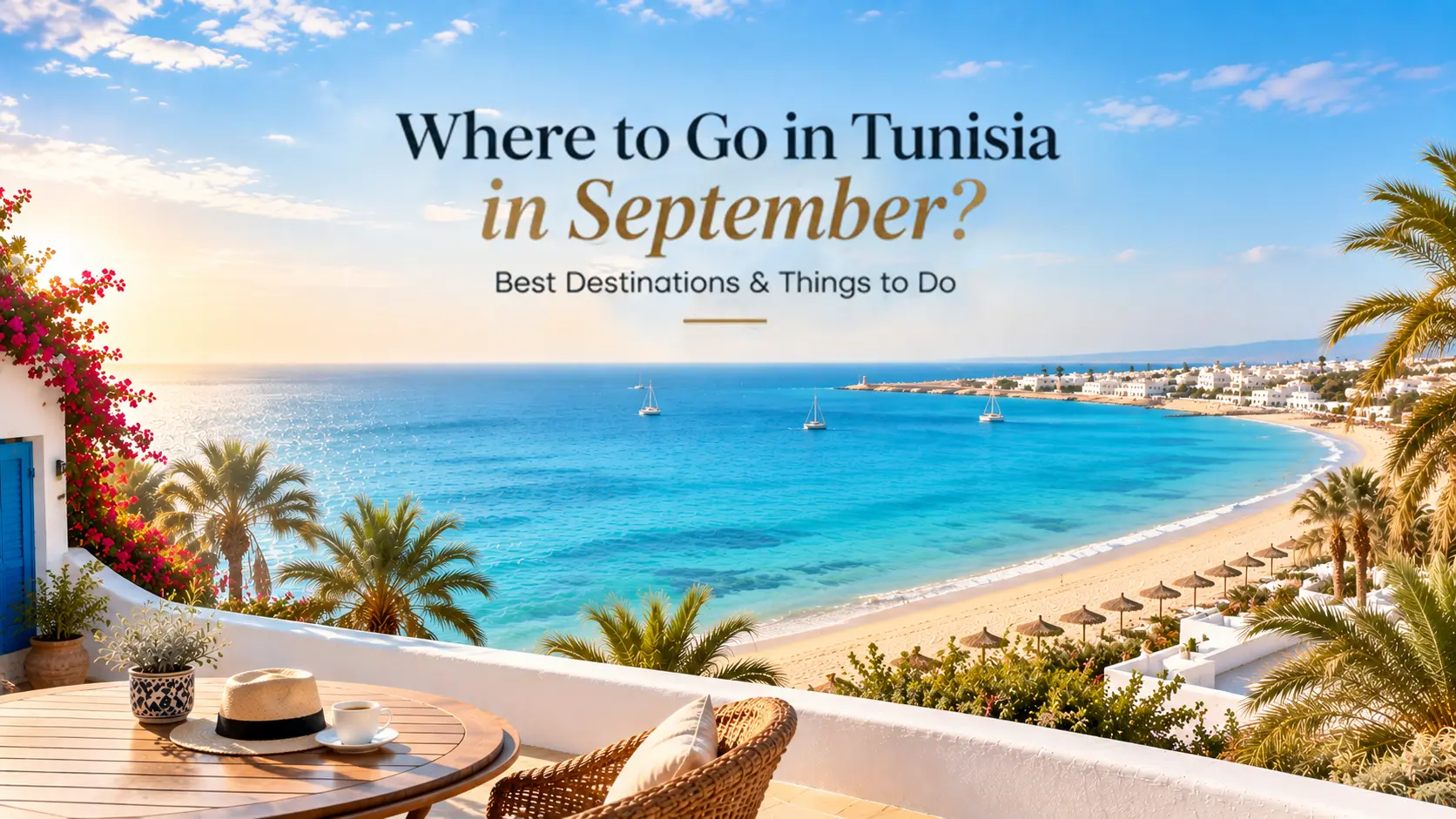
Best Places to Visit in Tunisia in Summer: Your Ultimate 2026 Travel Guide

If your idea of a perfect summer holiday involves endless golden beaches, warm turquoise water, rich history, and a budget that doesn’t make you wince, it’s time to look beyond the usual European hotspots. For foreign travelers, this destination in summer is a revelation. Located just a short flight from major European capitals but offering a completely different cultural landscape, this North African gem is the ultimate destination for sun-seekers in 2026.

Forget the crowded shores of the Costa del Sol or the Greek Islands. Here, you’ll find stunning coastal spots offering a unique blend of laid-back beach vacations and vibrant local life. Whether you’re a couple looking for romantic sunsets, a family searching for beach resorts, or a solo traveler on a budget, this guide covers everything you need to know before you go—from the hottest spots to essential packing tips.

Is Tunisia Safe and Comfortable in Summer? What You Need to Know

Before we dive into the destinations, Let’s address the practical concerns every international traveler has when considering a trip to North Africa in July or August.

Is it too hot ?

Yes, summer in Tunisia temperature ranges from 30°C to 40°C (86°F to 104°F). However, the coastal breeze makes it bearable. Locals and savvy tourists adapt by having a siesta during the hottest part of the day (12pm-4pm) and coming alive in the early evenings. The Mediterranean Sea is warm, making swimming a relief rather than a shock.

Is it safe ?

The country has invested heavily in tourism security. Tourist zones (Hammamet, Sousse, Djerba) are very safe and well monitored.

What about language ?

You will be pleasantly surprised. While Arabic and French are the local languages, English is widely spoken in hotels, resorts, and tourist shops.

Currency Tip: The Tunisian Dinar (TND) is a closed currency. You cannot take it in or out of the country in significant amounts. Exchange money at the airport or ATMs upon arrival and keep your receipts to change it back when you leave.

Now that you know what to expect and how to prepare, let’s dive into the first splash of color on your Tunisian adventure: the enchanting, blue-and-white cliffside village that defines the country’s Mediterranean charm.

The Best Summer Destinations in Tunisia: City by City

Sidi Bou Said Summer Travel Guide: The Perfect Day Trip

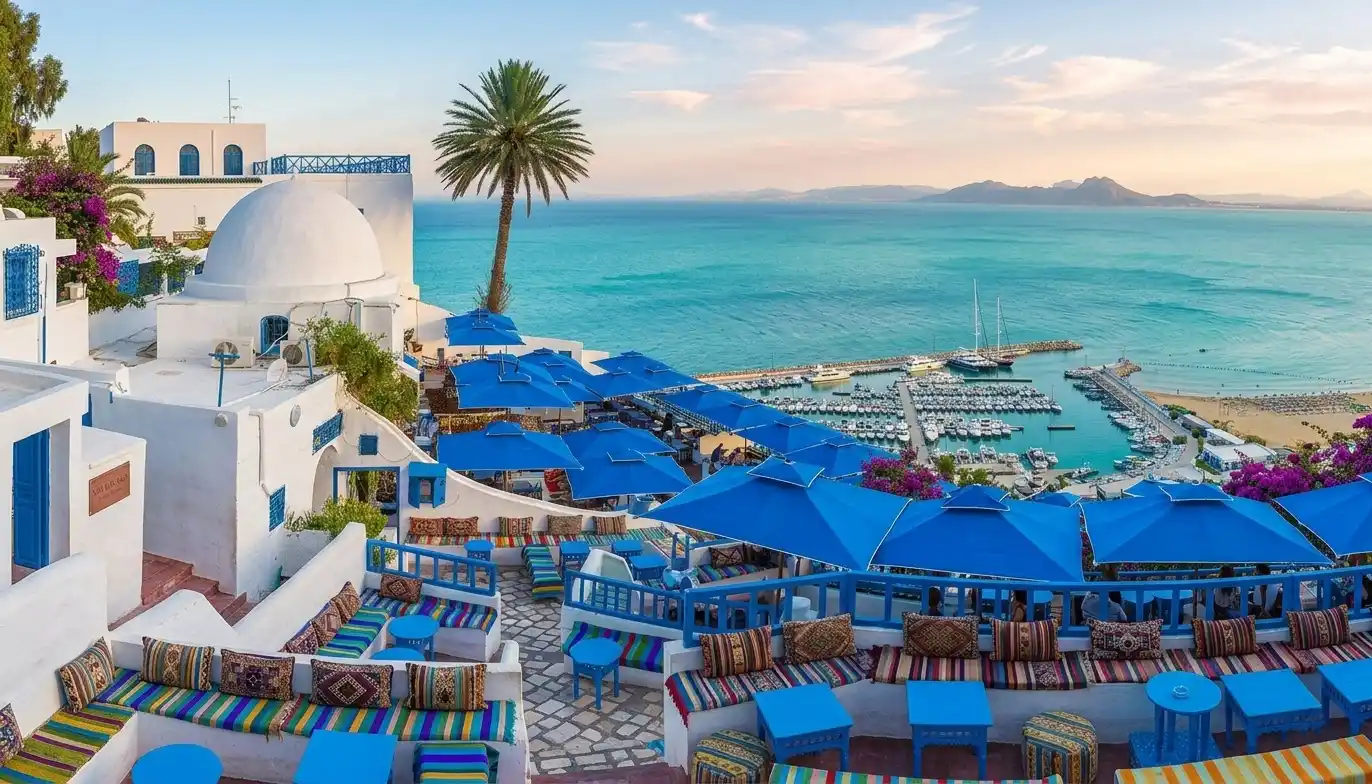
No Tunisia travel guide for summer visitors is complete without mentioning the iconic village of Sidi Bou Said. It is, quite simply, one of the most photogenic places in the Mediterranean.

Why Foreigners Love It:

  • The Aesthetic: Imagine Santorini, but with African charm and Islamic architecture. Every corner is a postcard.
  • The Vibe: Unlike some crowded European villages, this place highlights a calm and charming atmosphere where you can relax for hours. You can spend hours just sitting at Café des Délices, watching the boats sail across the Bay of Tunis.
  • Getting There: It’s a very easy 20-minute taxi or TGM train ride from downtown Tunis. For visitors using the train, it’s cheap (less than 1 Dinar) and safe. Just make sure to get off at Sidi Bou Said station (not Carthage). 
Scenic coastal view in Sidi Bou Said Tunisia featuring whitewashed buildings, blue domes, marina and turquoise Mediterranean Sea.
Sidi Bou Said: Tunisia’s Blue and White Paradise

Hammamet: The Garden Resort

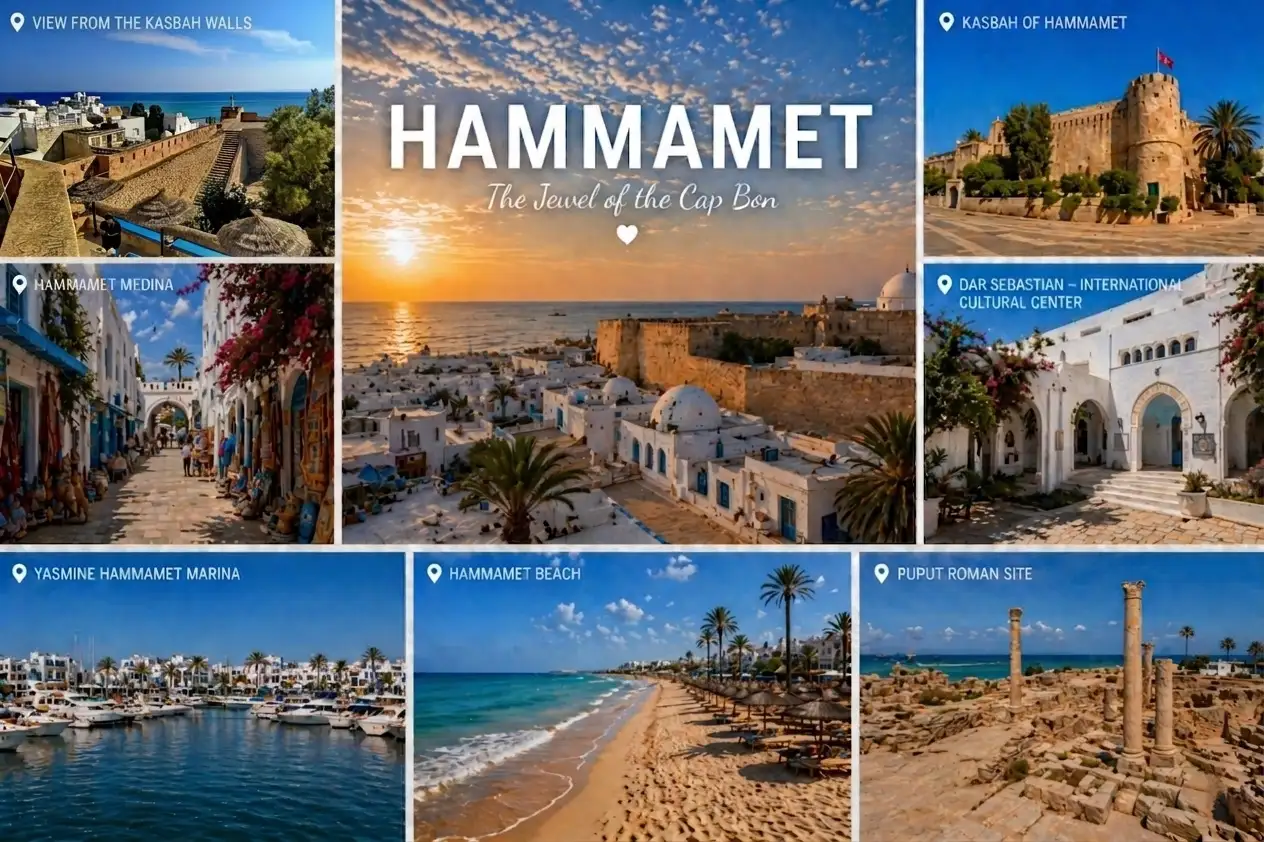
If your vision of a Tunisia beach vacation involves pristine sand, fragrant jasmine, and a touch of elegance, Hammamet is calling your name. Known as the “Garden Resort” of Tunisia, this city offers some of the finest Tunisia family beach resorts in the country. The beaches of Yasmine Hammamet are wide, clean, and slope gently into the warm Mediterranean, making them ideal for families with young children. Beyond the sand, the Medina of Hammamet offers a charming stroll through whitewashed walls and artisan shops, all with stunning sea views for travelers, Hammamet provides that perfect balance of Tunisia all-inclusive resorts with international standards and authentic local flavor. Don’t miss a sunset walk along the seafront, where the scent of orange blossom fills the evening air.

Stunning views of Hammamet, Tunisia, showcasing its kasbah, marina, beach, and cultural sites, perfect for travelers and explorers.
Hammamet Beaches and Medina Highlights

Sousse: The Lively Heartbeat of the Coast

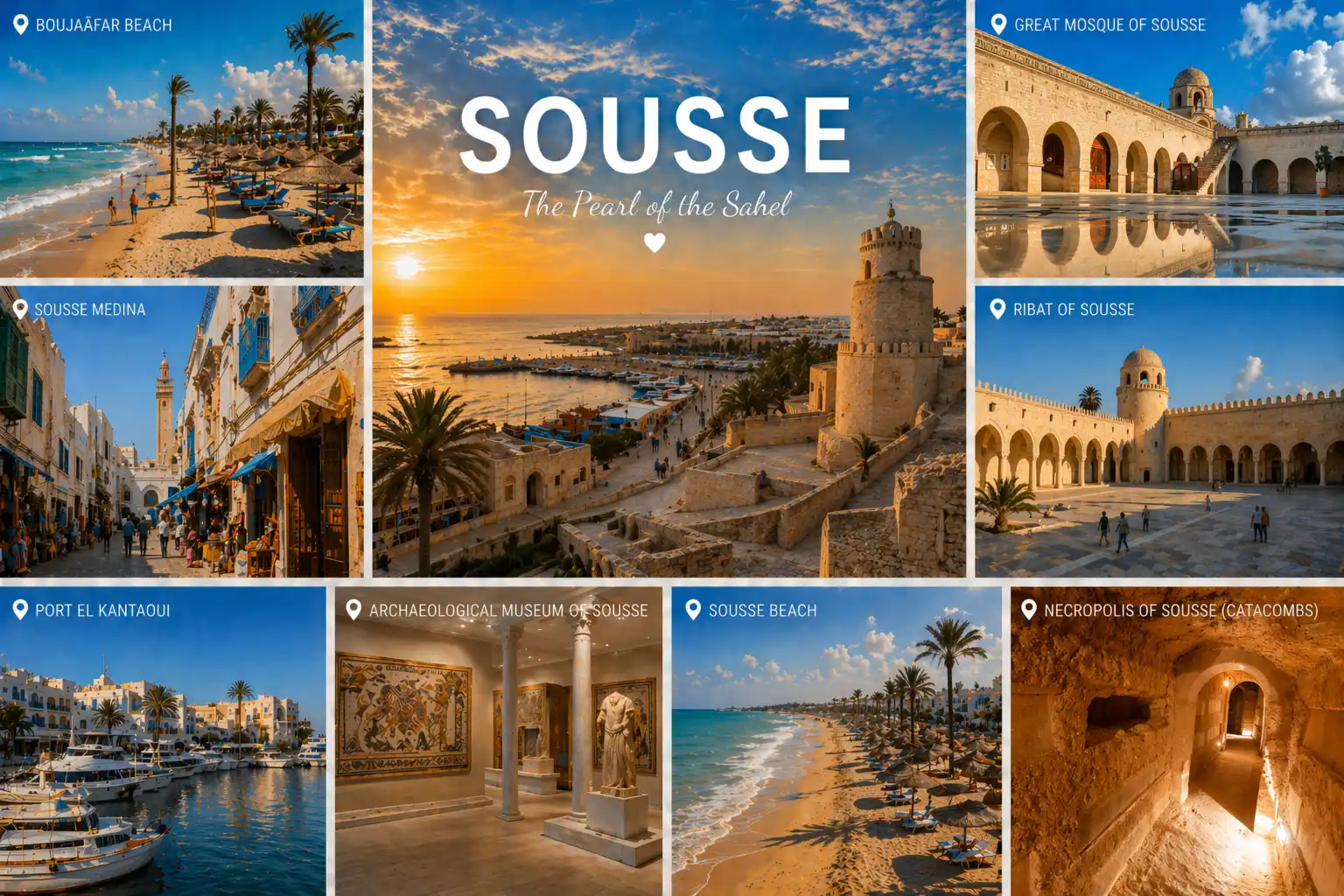
For those seeking energy, history, and a vibrant scene, this city delivers on all fronts. It is a fascinating mix of heritage and modern seaside life. Spend your morning exploring the ancient city of Sousse Medina, a UNESCO-listed treasure where you can wander through its labyrinthine alleys filled with history and local craftsmanship, then spend your afternoon at Boujaffar Beach, where the Mediterranean sparkles and the atmosphere buzzes with life. This is one of the top Tunisia beach destinations for younger travelers and groups of friends, thanks to its famous beach bars and nightlife. Evenings in Sousse are best spent in the elegant marina of Port El Kantaoui, where you can dine on freshly caught seafood while watching luxury yachts bob in the harbor. It’s a quintessential part of any Tunisia summer holidays plan.

Collage showcasing Sousse highlights: Boujaafar Beach, Medina, Port El Kantaoui, Great Mosque, Ribat, Archaeological Museum, and catacombs, under a scenic sunset.
Sousse: History, Beaches and Summer Vibes

Beyond the Mainland: The Djerba Summer Vacation Dream

If you have more than 7 days, you must consider this island for a more peaceful escape. It feels different from the mainland and offers a unique atmosphere.

Why Foreigners Fall in Love with Djerba:

  • The Light:The quality of light on the island is soft and golden—perfect for photos.
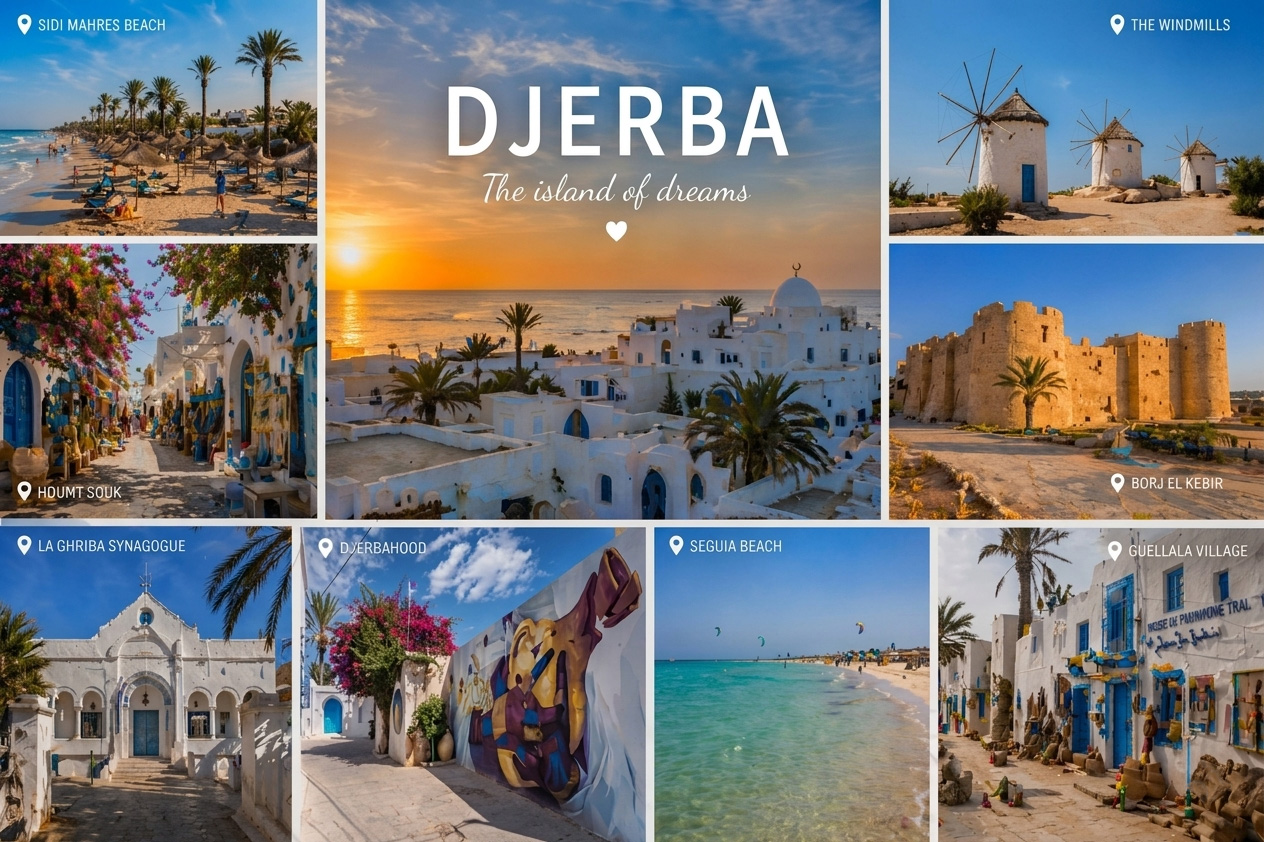
  • The Beaches:Sidi Mahrez beach is arguably one of the best beaches in Tunisia for summer vacation.
  • The Culture:Visit Djerbahood, where street artists from around the world have painted the walls of a traditional village. It’s a fascinating clash of old and new that feels very “global traveler” friendly.
A collection of pictures showcasing the beautiful island of Djerba, including a beach, a windmill, and a variety of buildings. The pictures are arranged in a collage format, highlighting the unique charm of this picturesque location.
Djerba: The Island of Dreams in Summer

What to Pack for Tunisia Summer Holiday: The Essential Checklist

Tunisia is warm and welcoming, but packing right ensures you stay comfortable and respectful of local customs. Here is the definitive guide on what to pack for Tunisia summer holiday bliss.

  • Lightweight, Modest Clothing: Temperatures often range between 30°C and 40°C, so lightweight clothing is essential. Bring sun protection and comfortable footwear. Pack linen trousers, long flowy skirts, and cotton t-shirts. While swimwear is fine on the beach or at the pool, always cover your shoulders and knees when entering a religious site. A large scarf or pashmina is essential for women to cover hair if visiting mosques.
  • Sun Protection: The sun is intense. Bring a high SPF sunscreen, a wide-brimmed hat, and polarized sunglasses.
  • Comfortable Footwear: You will walk on cobblestones and uneven surfaces. Sandals with straps (rather than flip-flops) are best for the Medinas.
  • European Adaptors: Tunisia uses Type C and Type E plugs (standard European two-pin) at 230V.
  • Medication & Hydration: Rehydration sachets or tablets are a lifesaver. While tap water is generally safe in major hotels, stick to bottled water.

Finding Your Perfect Summer Base: Tunisia All-Inclusive Resorts

One of the biggest draws for international holidaymakers is value for money.

All-inclusive resorts offer excellent value, often at lower prices than similar hotels in Spain or Italy. You will find options for families, couples, and budget travelers.

Choosing the Right Spot:

  • For Families:Look at best all-inclusive resorts in Djerba for families like the Vincci Resort or Hasdrubal Prestige. They have massive pools, kids’ clubs in multiple languages (French/English), and private beach access.
  • For Couples:Look for “Adults Only” wings in Hammamet hotels like The Sindbad. They offer quiet pools and spa access.
  • For Budget Travelers:Sousse offers many 3-star hotels right on the beach that offer cheap all-inclusive holidays Tunisia summer deals with basic but clean rooms and hearty buffet food.

Secure Your Spot for Summer 2026

The key to an unforgettable summer experience is booking early.

Don’t just dream about the Mediterranean—come experience the warmth of Tunisian hospitality, the freshness of grilled fish, and the beauty of the Sahara’s gateway to the sea.

Summer availability is limited — secure your spot early.

Ready to experience the best of Tunisia this summer?

Let the local experts at Open Tunisia craft your perfect getaway.

From handpicked hotels to unforgettable excursions, every detail is designed for you.

 Request your personalized quote today and start planning your dream summer in Tunisia.

❓ FAQ – Traveling to Tunisia in Summer

Why choose Tunisia for a summer holiday ?

Tunisia stands out as a destination that combines Mediterranean scenery with North African culture, offering a different experience compared to typical European beach destinations.

Expect hot and sunny days. Coastal regions benefit from refreshing sea air, while inland areas tend to be drier and warmer.

Most visitors experience a smooth and enjoyable stay, especially in well-developed tourism areas where services and infrastructure are adapted to international travelers.

Travelers often choose Tunisia for its competitive pricing on accommodation, food, and experiences, making it possible to enjoy a full holiday at a lower cost.

Travelers are often drawn to coastal regions and island destinations, such as Hammamet, Sousse, Djerba, and Sidi Bou Said, where they can enjoy beautiful beaches, summer activities, and a lively atmosphere.

The destination attracts a wide range of visitors, including families, couples, and groups looking for both relaxation and cultural discovery.

In tourist areas, communication is generally easy thanks to the use of multiple languages in hotels, restaurants, and services.

Planning ahead, choosing appropriate lightweight clothing, and staying hydrated are essential for a comfortable travel experience.

High demand during the summer season means availability can become limited, so booking in advance helps secure better deals and preferred accommodations.

Warm sea temperatures, long sunny days, and a variety of beach settings create ideal conditions for a perfect summer holiday.


Ramadan atmosphere in Tunis with traditional lanterns and dates prepared for iftar.

Experiencing Ramadan in Tunisia: A Day and Night Journey Through Tunis

If you are planning a trip and wondering what it’s like to visit Tunisia during Ramadan, you are not alone. Many travelers ask the same questions: Will everything be closed? Is it a good time to travel? What is the atmosphere like?

The truth is that Ramadan in Tunisia offers one of the most unique cultural travel experiences in North Africa. While the rhythm of daily life shifts slightly, the country becomes filled with warmth, tradition, and vibrant nightlife.

To truly understand the magic of Ramadan in Tunisia, imagine spending a full day in Tunis — from the quiet early morning streets to the lively markets and the joyful evenings after Iftar.

Let’s walk through a typical Ramadan day like a local.


What Is Ramadan Like in Tunisia for Travelers ?

Ramadan is the ninth month of the Islamic calendar, during which Muslims fast from sunrise to sunset. During daylight hours, people avoid food and drink, focusing instead on spirituality, reflection, and generosity.

However, for visitors, Ramadan is much more than fasting. It is a time when Tunisian culture truly shines through family gatherings, traditional foods, community celebrations, and lively nights.

If you’re wondering whether it is safe or convenient to travel to Tunisia during Ramadan, the answer is yes. Hotels, resorts, and tourist attractions remain open. The biggest difference is simply the daily rhythm: quiet and peaceful mornings, busy afternoons in the markets, and festive evenings after sunset.

For travelers interested in cultural tourism, food experiences, and authentic local traditions, Ramadan can actually be one of the most fascinating times to visit Tunisia.

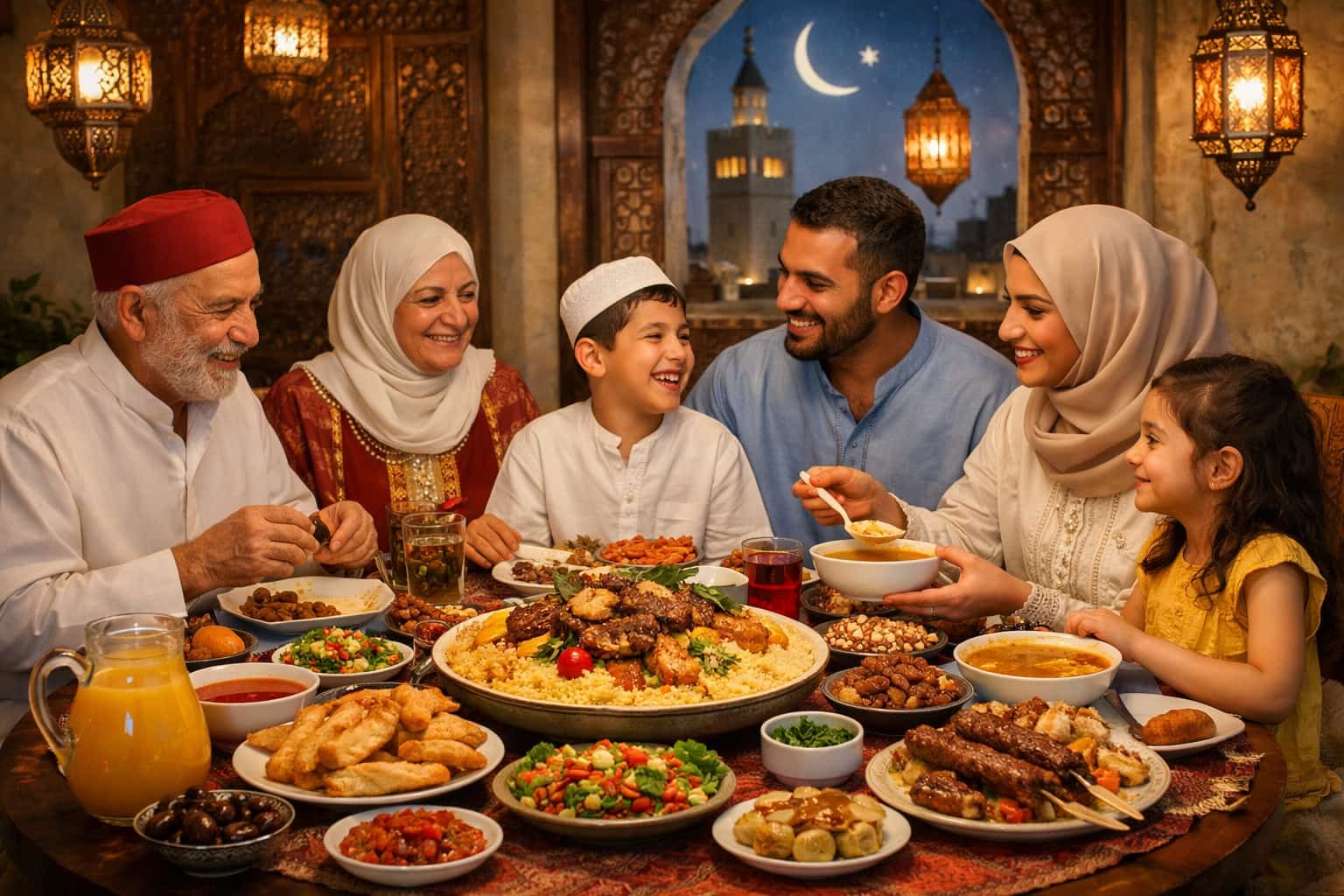
Tunisian family enjoying traditional Ramadan iftar dinner with couscous and dates in Tunis

Morning in Tunis: Suhoor and the Calm Before the Day

A Ramadan day begins long before sunrise with Suhoor, the pre-dawn meal that prepares people for the day of fasting.

In Tunis, some neighborhoods remain lively deep into the night as locals gather for Suhoor with friends and family. Areas like Sidi Bou Said, El Ouina, and Ennasr are known for their late-night cafés and street food spots during Ramadan.

Other historic districts such as Bab Souika and Bab El Khadra offer a more traditional atmosphere, where lanterns light the streets and food stalls serve local specialties until the early hours of the morning.

One of the most traditional dishes served during Suhoor is Drôo (Dro3) — a warm, creamy porridge made from sorghum flour. It is often served with nuts or sweet toppings.

After Suhoor, the city slowly becomes quiet. As the sun rises, the streets of Tunis feel calm and peaceful. Artisans open their shops in the Medina, bakeries prepare fresh bread, and the city moves at a slower, relaxed pace.

For travelers, this is the perfect moment to explore the historic Medina of Tunis, walk through traditional markets, or enjoy cultural sightseeing without crowds.

Afternoon in Tunis: Markets Full of Life

By the afternoon, the atmosphere begins to change.

As the time for Iftar, the sunset meal, approaches, the streets fill with energy. Families head to the markets to buy fresh ingredients, and vendors prepare their stalls for the evening rush.

One of the best places to experience this moment is the Central Market of Tunis.

Here, the senses come alive. Vendors proudly display colorful vegetables, fragrant herbs, fresh fish, and traditional spices. The air is filled with the aromas of Tunisian cooking, while lively conversations and friendly bargaining echo through the market.

For dessert lovers, the Medina of Tunis becomes a paradise during Ramadan. Pastry shops overflow with traditional sweets such as makroudh, along with other honey-soaked delicacies prepared especially for the holy month.

Walking through these streets offers travelers an authentic glimpse into daily life in Tunisia during Ramadan, where food, family, and tradition come together.

Sunset in Tunis: The Magic of Iftar

As sunset approaches, something special happens across the city.

The busy streets slowly empty as everyone prepares for Iftar, the moment when the fast is broken. Families gather at home, while restaurants and cafés prepare tables for the evening meal.

When the call to prayer echoes across Tunis, the fast ends and the celebration begins.

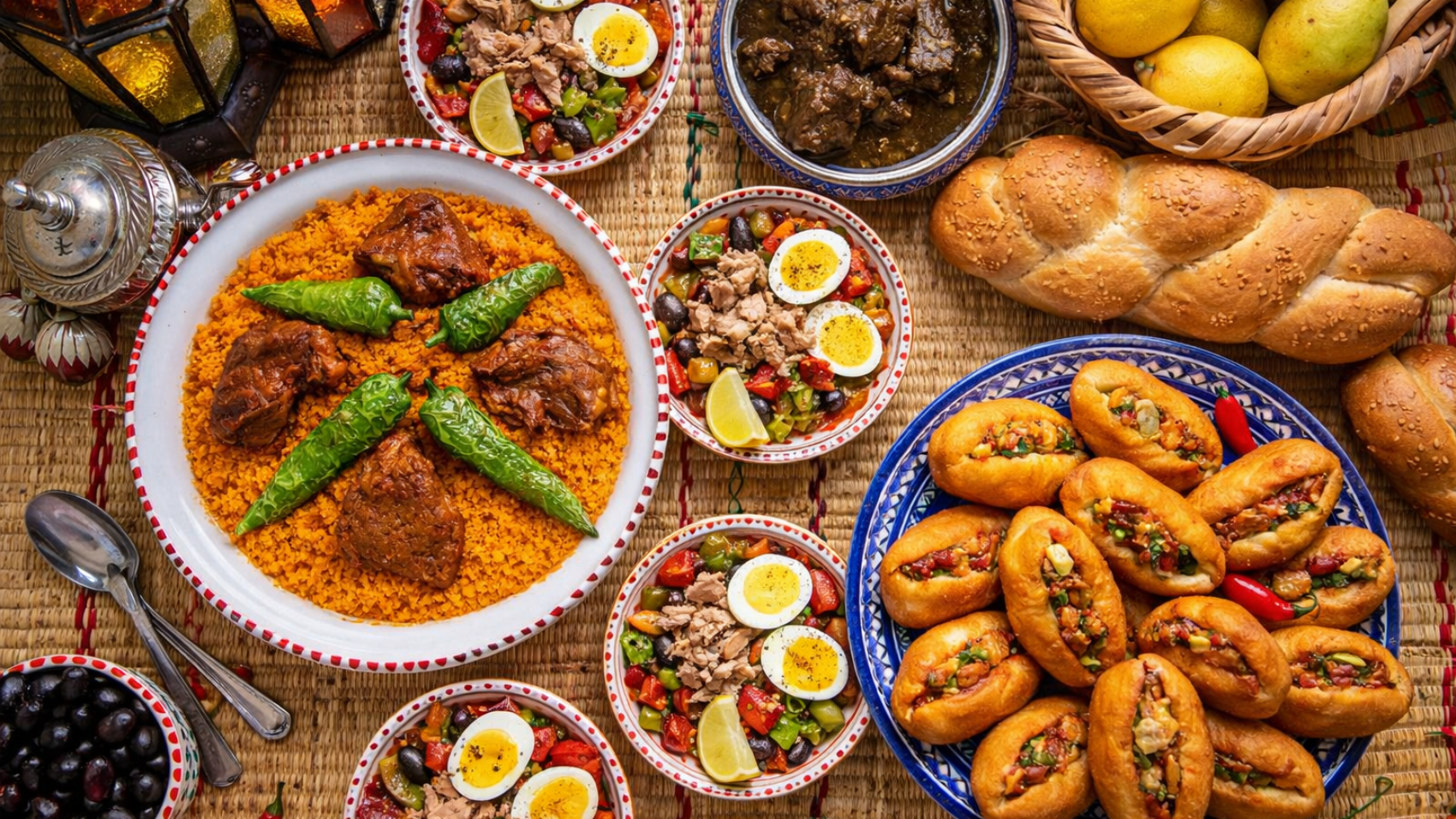
Traditional dishes fill the table, including chorba, a flavorful Tunisian soup; couscous with vegetables or meat; makarouni, a beloved Tunisian pasta dish; fresh bread and salads; and sweet pastries from the Medina.

The atmosphere is warm, joyful, and deeply social.

Tunisian iftar table with couscous, brik, chorba, mechouia salad, dates and traditional bread

Night in the Medina: The Heart of Ramadan

After Iftar, the city transforms.

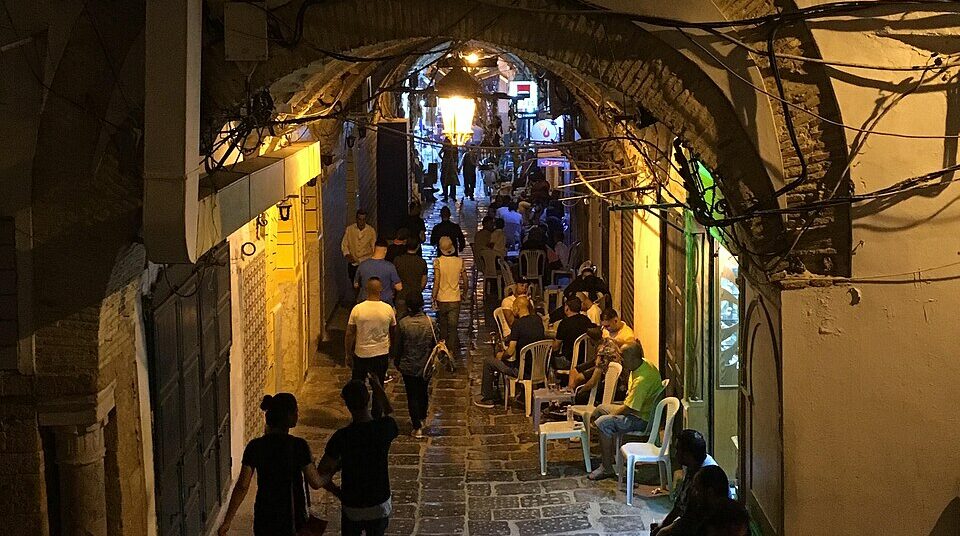
The Medina of Tunis comes alive with lights, music, and laughter. Families stroll through the streets, cafés fill with people drinking tea and coffee, and musicians perform in small squares and alleyways.

Children run through the illuminated streets while friends gather late into the night to talk, eat desserts, and enjoy the festive atmosphere.

For visitors, this is one of the most unforgettable travel experiences in Tunisia.

Old Medina of Tunis after iftar during Ramadan, showing streets, lanterns, and local evening life

Traveling to Tunisia during Ramadan allows visitors to experience the country in a deeper and more authentic way.

From the peaceful mornings to the vibrant markets and the joyful nights, Ramadan reveals the heart of Tunisian culture — hospitality, generosity, and community.

Experience the magic for yourself. Plan your journey with Open Tunisia and discover the beauty of Ramadan in Tunis.


ChatGPT Image 26 déc. 2025, 16_40_22

Ready to Discover Tunisia Through Its Gastronomy: A Journey of Traditions, Flavors, and Street Food?

Nowadays, our ways of traveling have profoundly changed. We are no longer simply looking to discover iconic monuments and spectacular landscapes. Instead, contemporary travelers aspire to live an authentic experience by wearing local clothes and savoring the unique flavors that distinguish one country’s cuisine from another, making local gastronomy a gateway to a country’s culture. So, let’s set off together to discover the culinary richness of Tunisia and the adventures awaiting you on your next trip.

Traditional Dishes: The Soul of Tunisian Gastronomy

Couscous: Heritage, Rituals, and Regional Variations

Couscous is a common dish in the Maghreb, but each country has its own unique way of preparing it. In Tunisia, this meal holds great importance—it’s the recipe that brings Tunisian families together every Sunday and the one used to celebrate our weddings. So, what is its specificity compared to other countries?

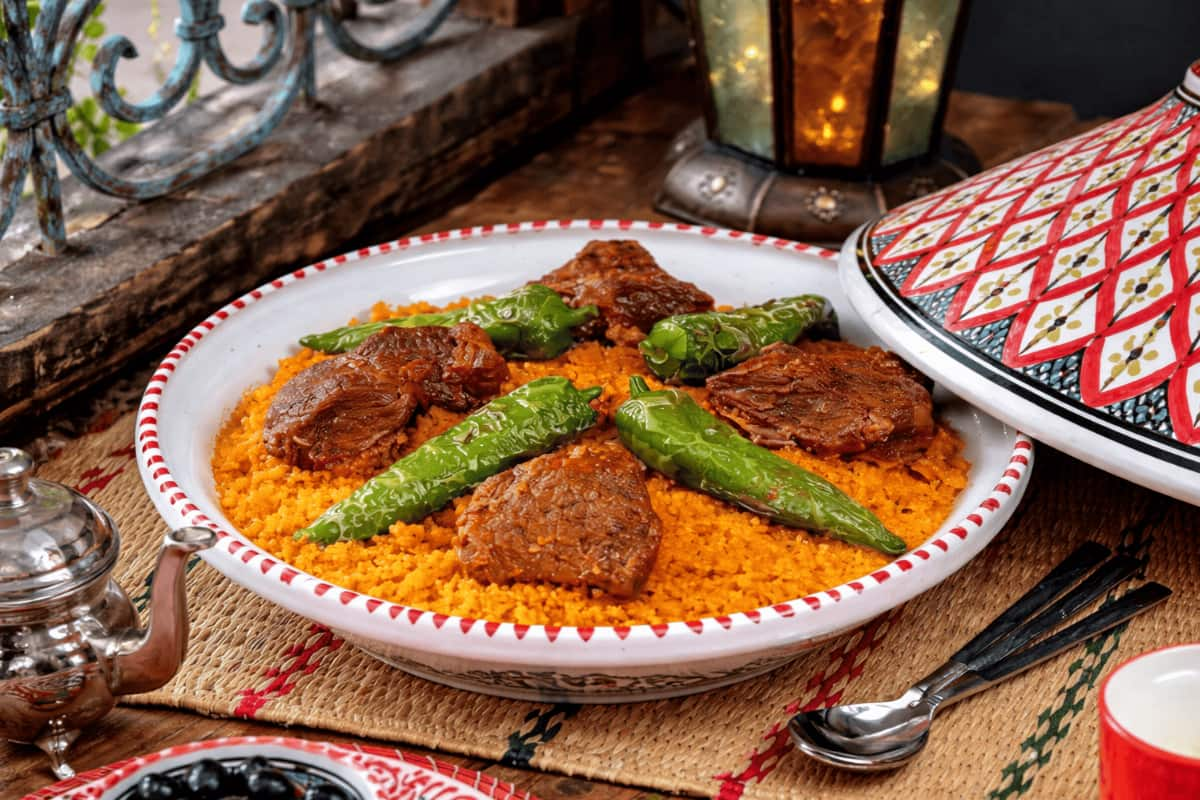
Prepared with care and tradition, Tunisian couscous starts with hand-rolled wheat semolina, lightly oiled and moistened before being steamed in the famous keskes. Meanwhile, a delicious sauce called marqa simmers gently with a variety of vegetables such as potatoes, onions, and others depending on the season, spiced with fragrant spices and meat, fish, or chicken depending on the region. Once the semolina is light and fluffy, it is mixed with the sauce to create a flavorful, colorful, and rich dish. More than just a meal, couscous is a symbol of conviviality and a moment of sharing deeply rooted in Tunisian culture.

Traditional Tunisian couscous with semolina, meat and green peppers served in a decorative ceramic plate
Traditional Tunisian couscous topped with tender meat and green peppers, served in a classic ceramic dish.

Salade Mechouia: Tunisia's Smoky Grilled Salad Sensation

Salade Mechouia is a staple of Tunisian cuisine—simple, tasty, and steeped in history. It finds its origins in Arab-Andalusian culinary heritage, brought by communities who settled in the Cap Bon region after the fall of the Kingdom of Granada in 1492. These settlers introduced new agricultural practices and New World vegetables like tomatoes and peppers, which later became the heart of this specialty.

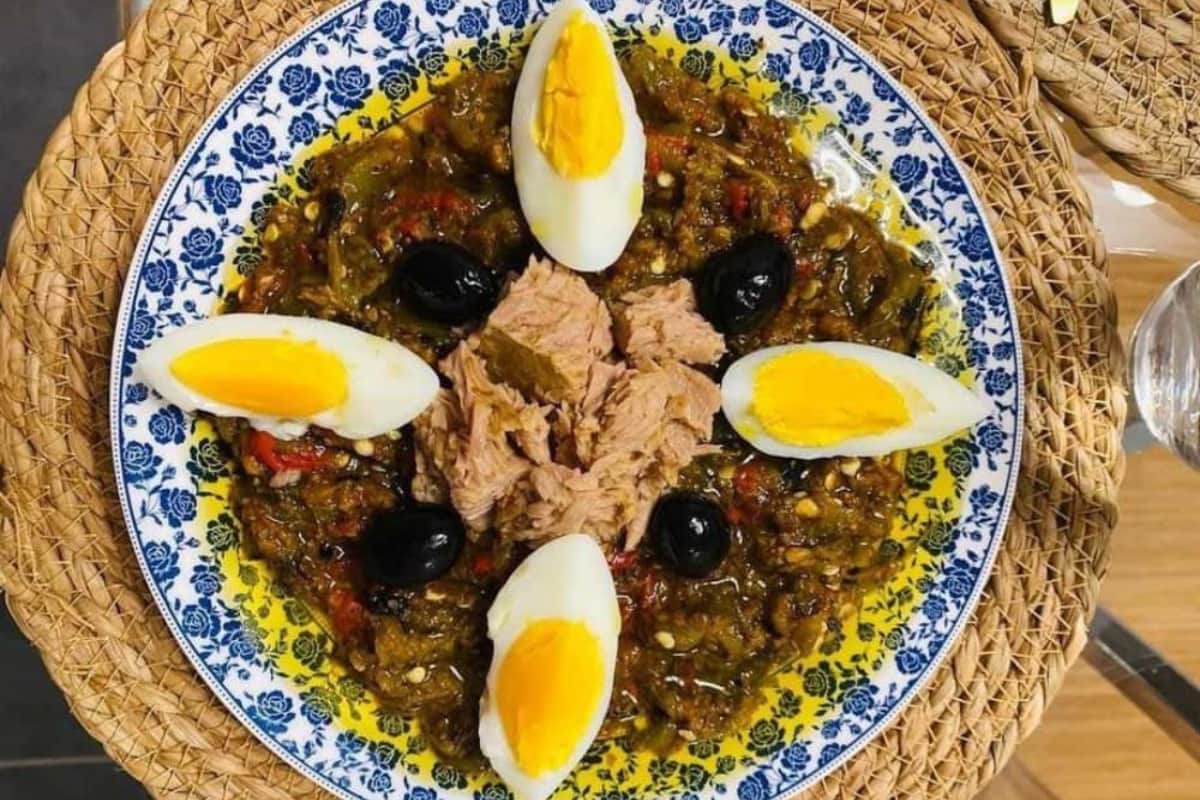
Prepared from peppers, tomatoes, eggplants, and garlic slowly grilled over charcoal, mechouia is distinguished by its intense smoky aromas. Once crushed, the vegetables are seasoned with salt, black pepper, and caraway, then generously drizzled with olive oil. An indispensable part of Tunisian tables, it can be enjoyed on its own or integrated into popular street foods. For the most authentic experience, it is best paired with the famous tabouna bread.

Traditional Tunisian mechouia salad made with grilled vegetables and olive oil
Smoky mechouia salad made from grilled peppers, tomatoes and olive oil, a classic Tunisian appetizer.

From Pan to Plate: The Simple Magic of Tunisian Chakchouka

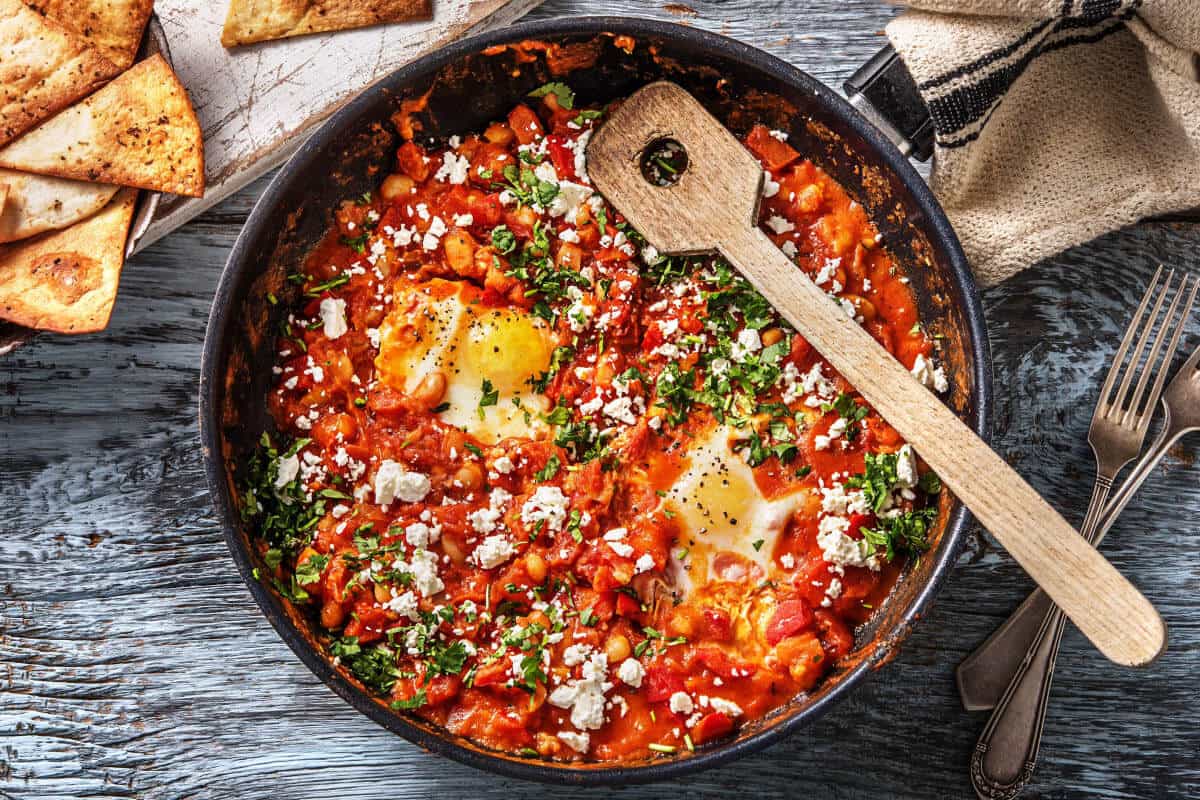
Chakchouka is a traditional Tunisian dish appreciated for its simplicity and rich flavors. It is prepared with tomatoes, peppers, and onions simmered in olive oil, seasoned with garlic, paprika, and sometimes a bit of harissa to enhance the taste. Eggs are then cracked directly into the sauce and cooked gently until they reach a creamy texture. Eaten hot and often accompanied by bread for dipping, it is a popular meal for lunch or dinner and an integral part of modern Tunisian cooking.

Tunisian chakchouka with eggs cooked in tomato and pepper sauce
Chakchouka simmered with tomatoes, peppers and eggs, a comforting and flavorful Tunisian dish.

The Dark Stew of Tunisia: A First-Timer's Guide to Mloukhia

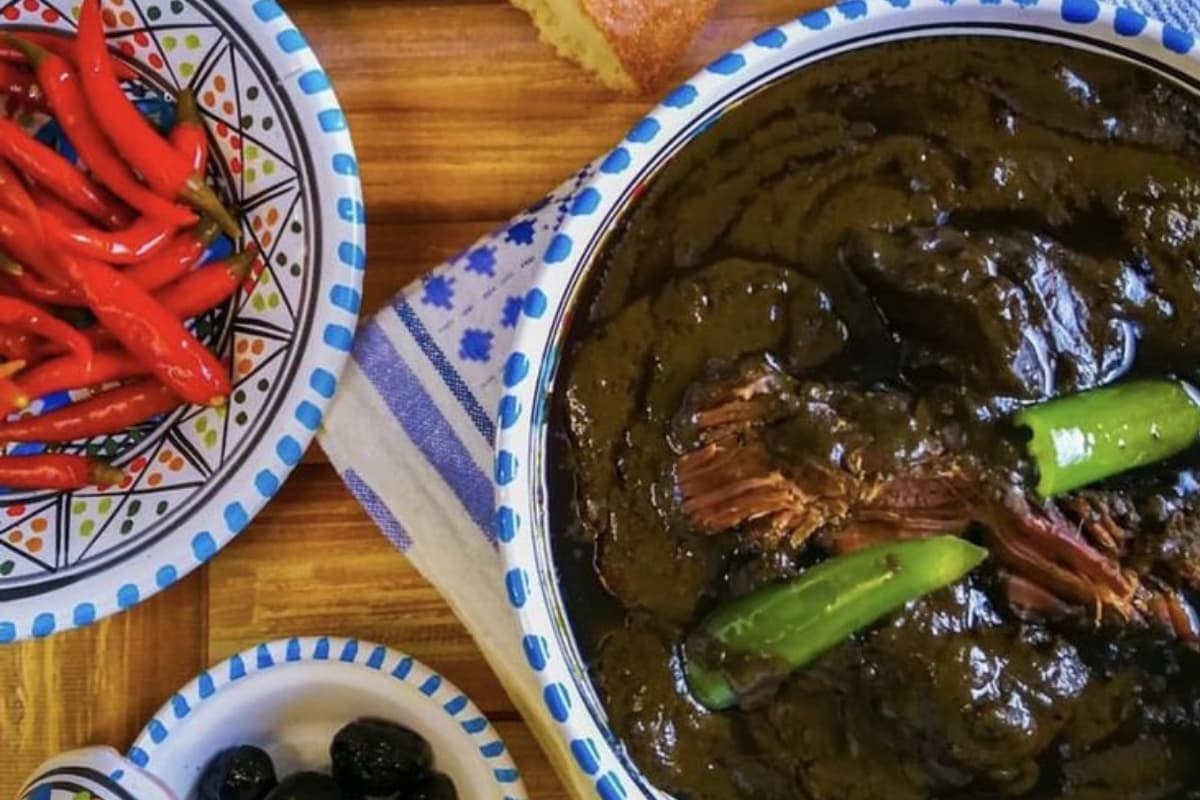
Mloukhia, one of the most representative dishes of Tunisian cuisine, is prepared from dried jute leaf powder, cooked for a long time at least five hours—with olive oil and meat. Its dark shades and particular texture may be surprising at first glance, but its powerful aroma and deep flavors give you a desire to taste it and uncover the secret behind its success in Tunisia.

Traditional Tunisian mloukhia dish cooked with jute leaf powder and meat
Mloukhia slowly cooked for hours, one of the most iconic and deeply flavored Tunisian dishes.

Tunisian Street Food: A Tasty and Living Heritage

A Bite of History: The Story Behind the Tunisian Fricassé

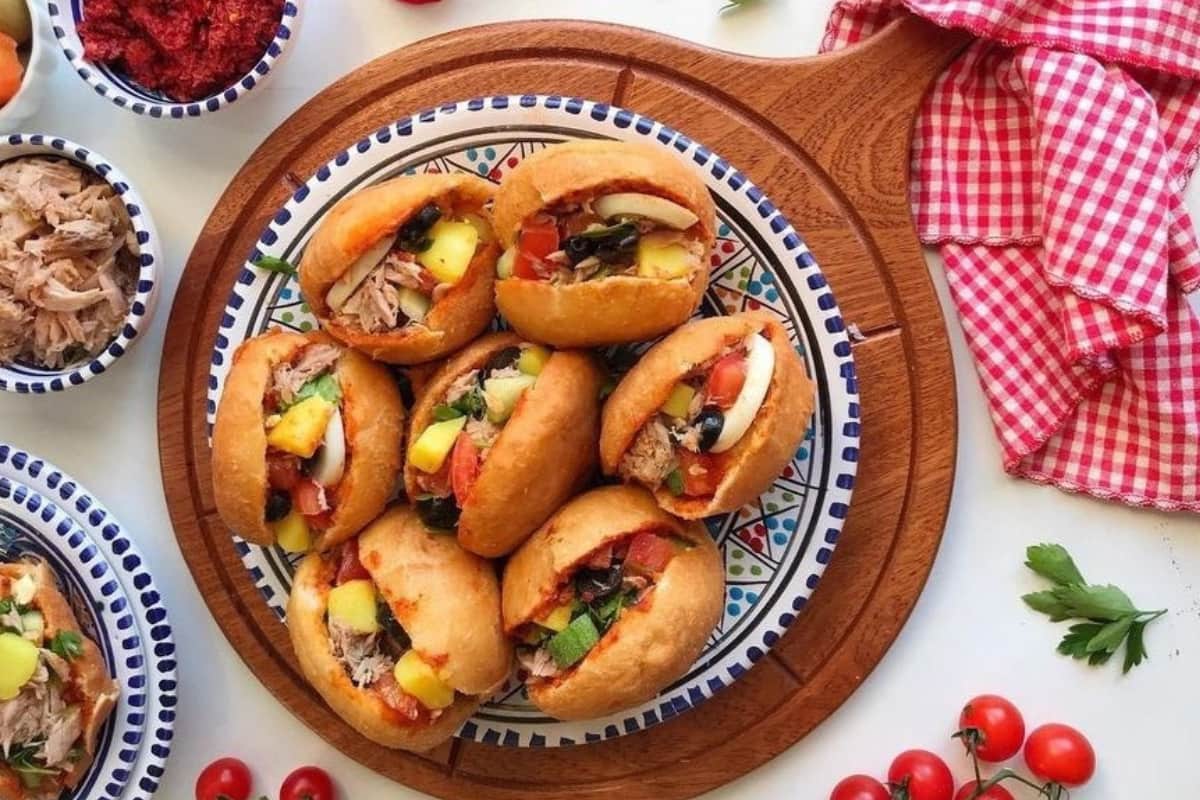
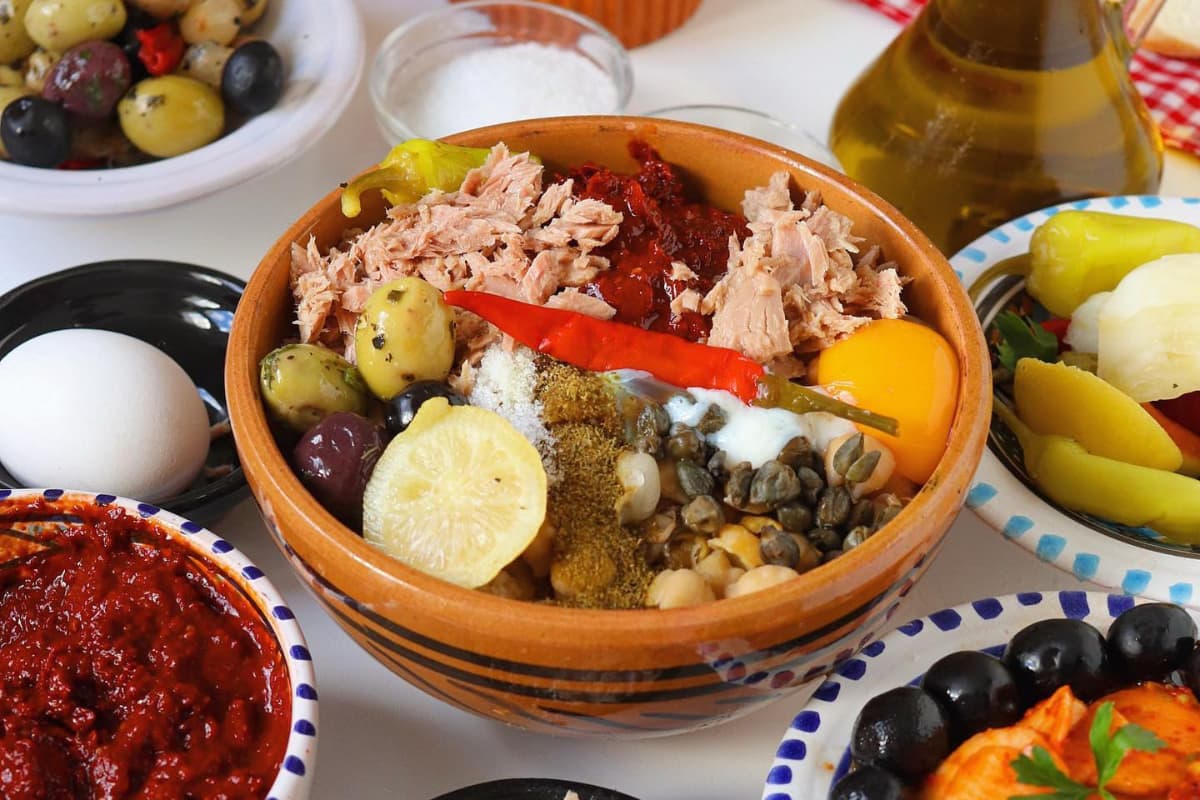
The Tunisian fricassé is much more than a simple snack; it’s a true institution of street food, born from culinary ingenuity and a story of resourcefulness. Originally, in the 19th century, a woman from a Jewish community in Tunisia had prepared many sweet donuts for guests who ultimately did not come. Rather than wasting them, she had the idea to transform them into a savory version: she split them and filled them with whatever she had on hand. This first “combo” was an immediate success, and from generation to generation, the recipe was passed down and perfected until achieving a 100% flavorful mix. Today, the fricassé is traditionally filled with a gourmet mixture of tuna, mashed potatoes, hard-boiled eggs, olives, and harissa, making it a staple of Tunisian street cuisine.

Tunisian fricassé sandwich filled with tuna potatoes eggs olives and harissa
Tunisian fricassé filled with tuna, potatoes, eggs and harissa, a must-try street food.

A Legend in Every Bite: The Story of the Casse-Croûte Tounsi

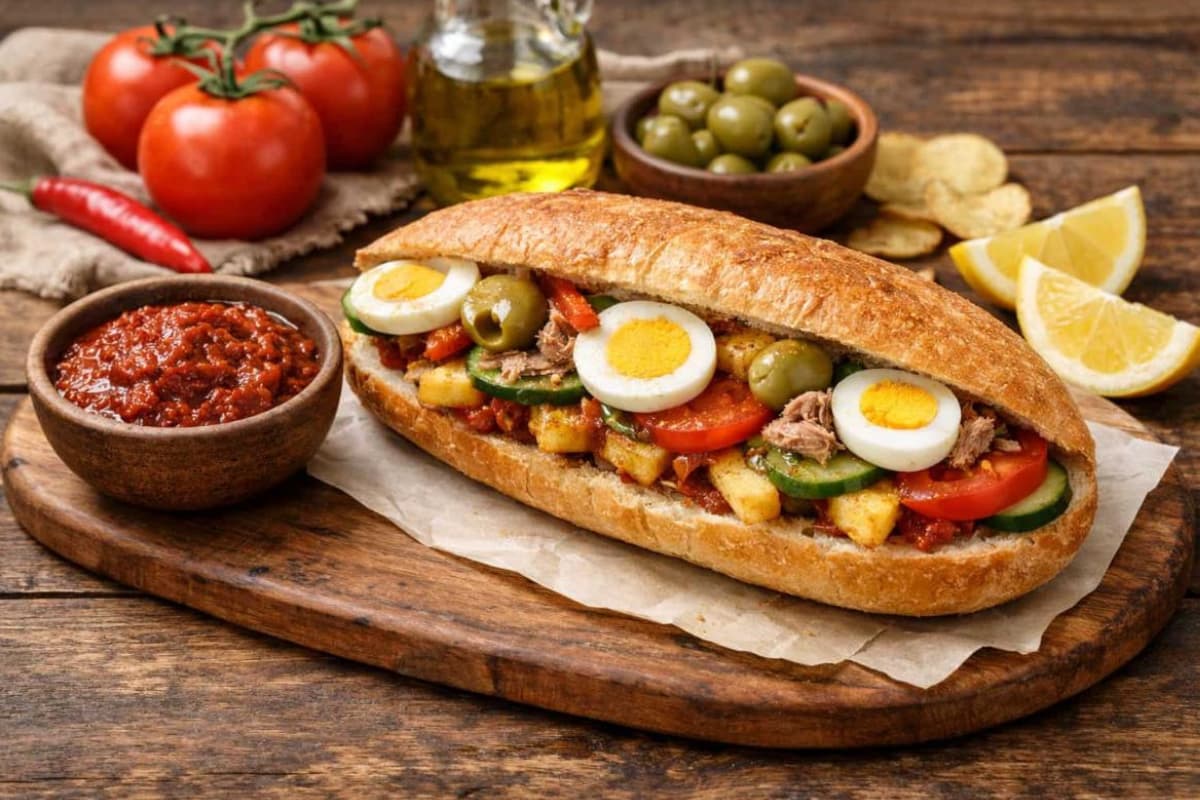
The Casse-croûte Tounsi, nicknamed the “Tunisian sandwich,” is a true symbol of local street food. Born by chance at the end of the 19th century thanks to Banoun, a Jewish beggar from Tunisia, this sandwich started modestly with bread and an egg given by a benefactor. Quickly, he had the idea to add a new ingredient each day: onion, chili pepper, potato, harissa… His creation attracted the attention of the locals and quickly became famous, leading him to open his first shop. Today, the Casse-croûte Tounsi consists of a half-baguette generously filled with: a crunchy Tunisian salad made from tomatoes, cucumbers, peppers, and onions, tuna, olives, and of course, a drizzle of harissa to spice it all up. It can also be enjoyed as a “plate,” offering a must-try classic for all lovers of Tunisian flavors.

Tunisian casse-croute sandwich with tuna salad vegetables olives and harissa
Casse-croûte tounsi, the iconic Tunisian sandwich packed with fresh salad and bold flavors.

Breakfast or Lunch? The Two Faces of Tunisia's Mlawi Bread

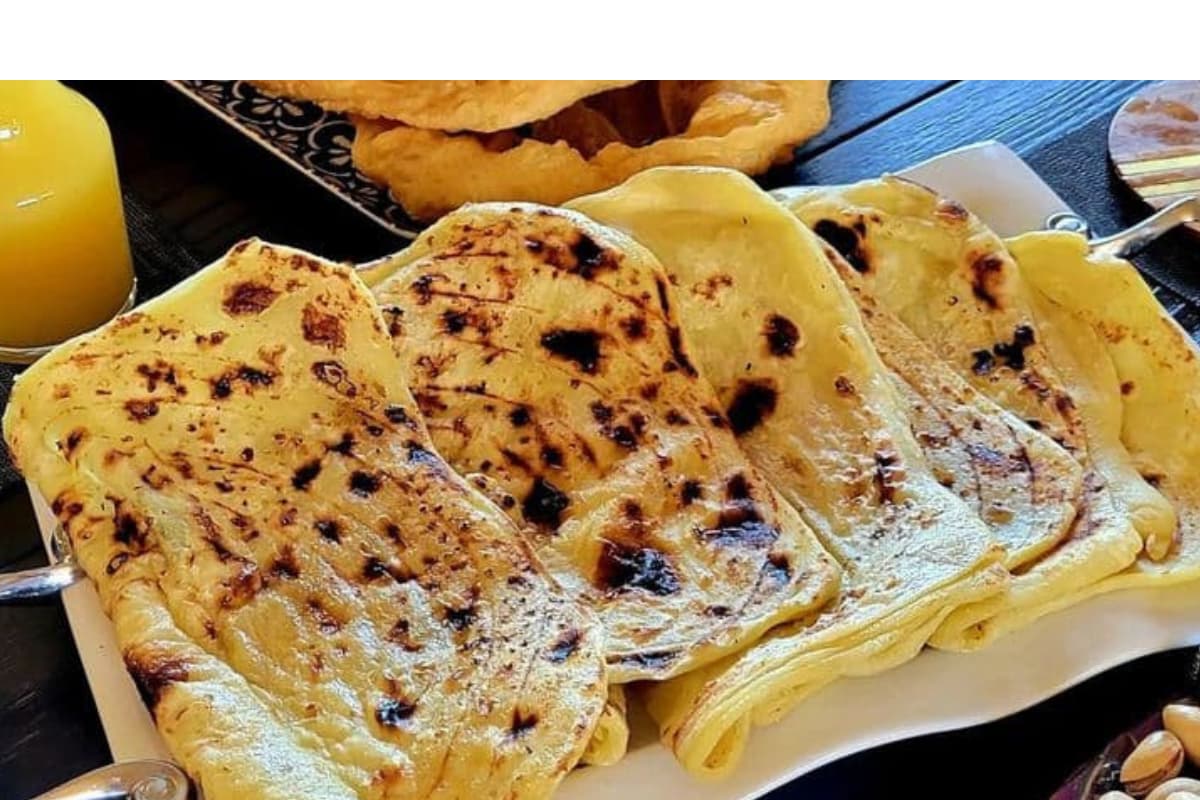
The Mlawi Sandwich is an essential Tunisian fast food, showcasing the famous homemade Mlawi bread. Originating from popular neighborhoods, this thin and soft bread is made from fine semolina, flour, olive oil, warm water, and salt. Its flexible a texture makes it perfect to eat plain with honey and olive oil for breakfast, or as a gourmet sandwich. In its savory version, the Mlawi is generously filled: harissa to enhance the flavors, spreadable cheese, tuna, and sliced hard-boiled egg, creating a tasty and complete snack, ideal for a meal on the go.

Tunisian mlawi flatbread served sweet with honey or savory as a traditional street food sandwich
Mlawi, a versatile Tunisian flatbread enjoyed both sweet with honey and savory as a street food sandwich.

The Winter Warmer: How to Eat Lablebi Like a True Tunisian

This is a Tunisian specialty made from chickpeas cooked in a broth flavored with cumin, salt, and paprika. It is usually enjoyed over slices of stale bread that soak up the broth, forming a rich and comforting consistency. We often tend to enhance the flavor by adding olive oil, harissa, a poached egg before eating, and tuna for more delight. Very popular in street food stalls, lablabi is especially consumed in winter, providing warmth and energy while remaining affordable and accessible to all.

Tunisian lablabi chickpea soup with bread olive oil harissa and egg
Warm and comforting lablabi made with chickpeas, cumin and olive oil, a winter favorite in Tunisia.

Tunisian cuisine is much more than an assembly of flavors: it is an immersion into the heart of a warm, authentic culture deeply attached to its traditions. From couscous, Salade Mechouia, chakchouka, to fricassé and mlawi, each dish tells a unique story that plunges you into the soul of the country and invites you to live an experience full of sharing and discoveries.

So, if you wish to live this culinary experience up close and savor these specialties at their source, Open Tunisia accompanies you on a journey rich in discoveries and encounters.

125 (1)

Discover Tunisia Differently: Beyond the Classic Tourist Trails

When people think of Tunisia, the first things that come to mind are golden beaches, sunny weather, and the refreshing Mediterranean atmosphere. Yet Tunisia hides many other treasures that most visitors never get to know.

This guide by Open Tunisia takes you to the heart of another Tunisia — one of troglodyte villages, hidden oases, Berber mountains, and genuine human encounters.

The Tunisian South: A Wonder to Explore

The Berber villages of Chenini and Douiret

It’s true that many people around the world have a limited image of Tunisia when it comes to tourism, but no one can deny the country’s incredibly rich history, stretching back more than 3,000 years. Over this long period, various civilizations succeeded one another, leaving their marks visible to this day. This is the case of the Berber villages of Chenini and Douiret.

These villages tell the ancient story of their people through a lifestyle expressed in their rock-carved homes, steep pathways, and desert landscapes — offering an experience that feels suspended in time.

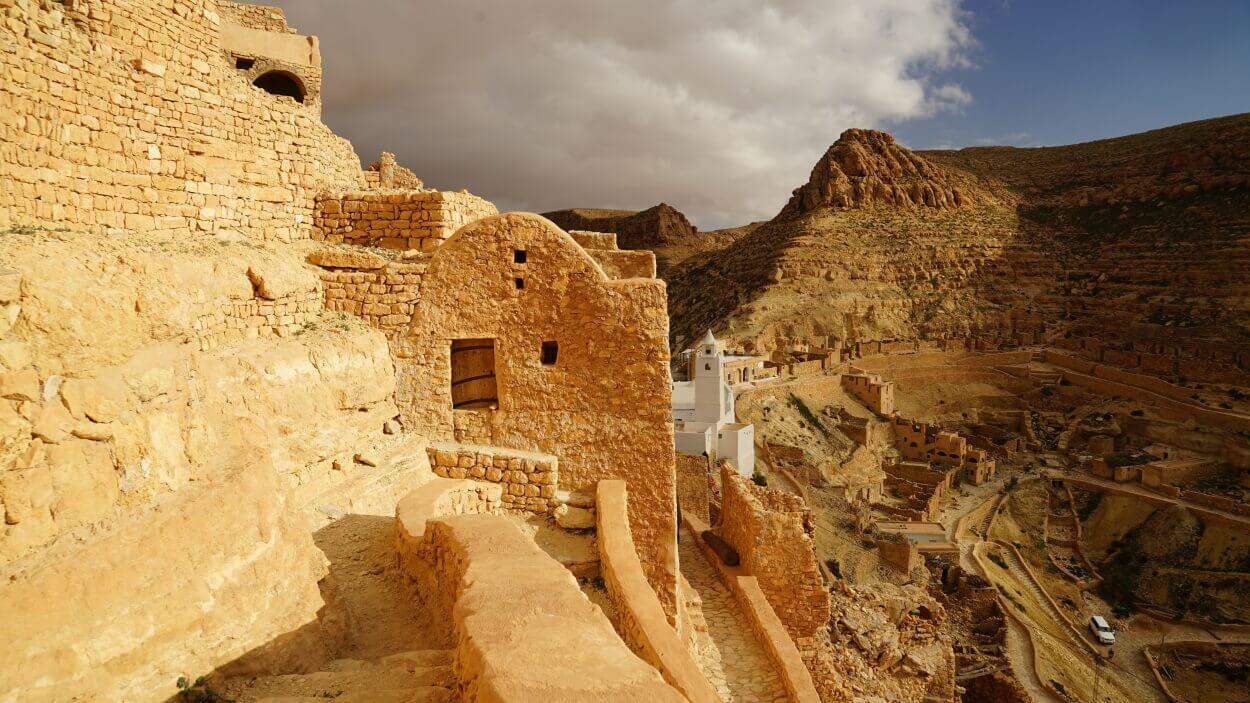
The Berber village of Chenini in Tunisia, with stone houses clinging to the mountainside beneath a cloudy sky.
The Berber village of Chenini perched atop the mountains of southern Tunisia.
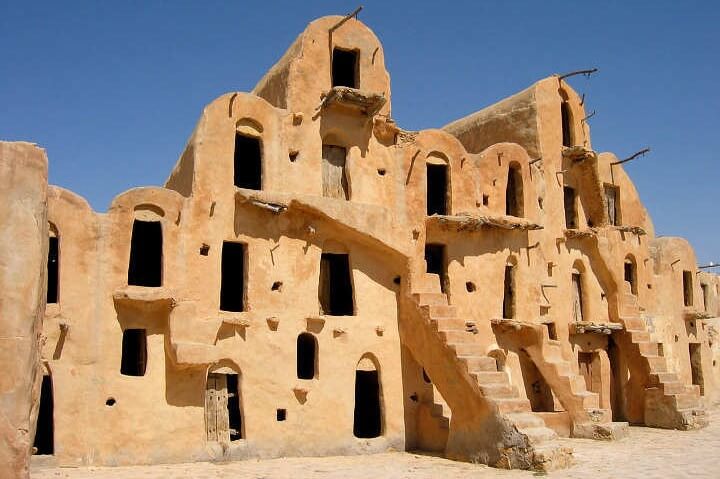
Traditional architecture of the Douiret ksar, with stacked granaries and earthen walls.
The Berber village of Douiret and its traditional architecture.

Ksar Ghilane, the oasis at the edge of the world

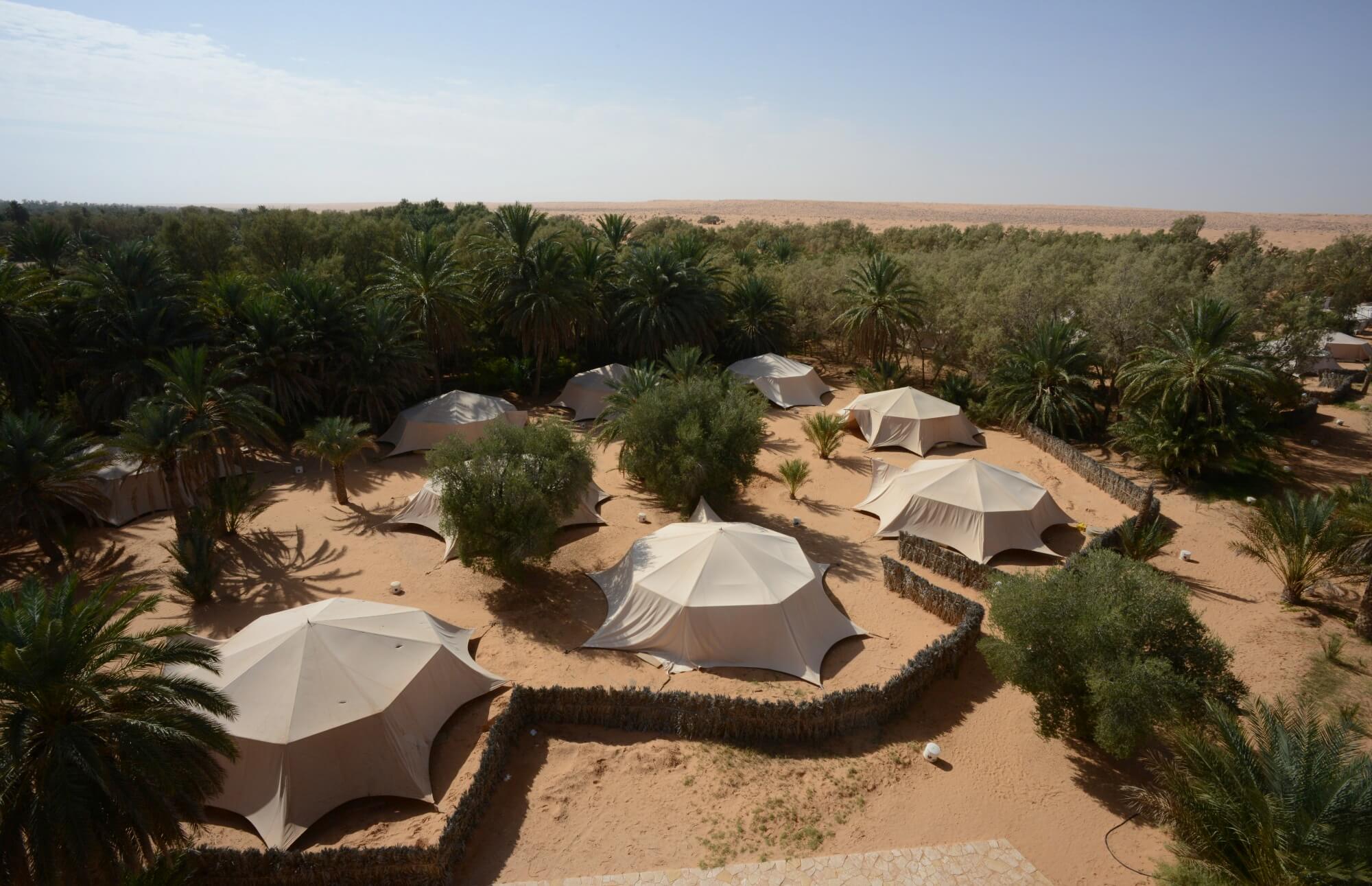
Southern Tunisia is home to many hidden gems, including the mythical oasis of Ksar Ghilane, nestled deep within the golden dunes of the Grand Erg Oriental, far from any urban bustle. A place of authenticity and tranquility, Ksar Ghilane invites visitors on a true journey beyond time.

Spending the night in a Berber camp is an unforgettable experience — an immersion into the spirit of ancient nomads, where the serenity of the desert blends with the magic of tradition. At sunset, the spectacle is breathtaking: the desert glows in warm orange hues as silence settles in.

Between adventure, relaxation, and cultural immersion, Ksar Ghilane is a rare place where time seems to stand still — a true invitation to disconnect and explore the authentic Sahara.

Saharan camp at Ksar Ghilane in Tunisia, traditional tents set up in the heart of the desert.
The Saharan camp of Ksar Ghilane, an oasis in the heart of the Tunisian desert.

The Central Oases: Nature and Authenticity

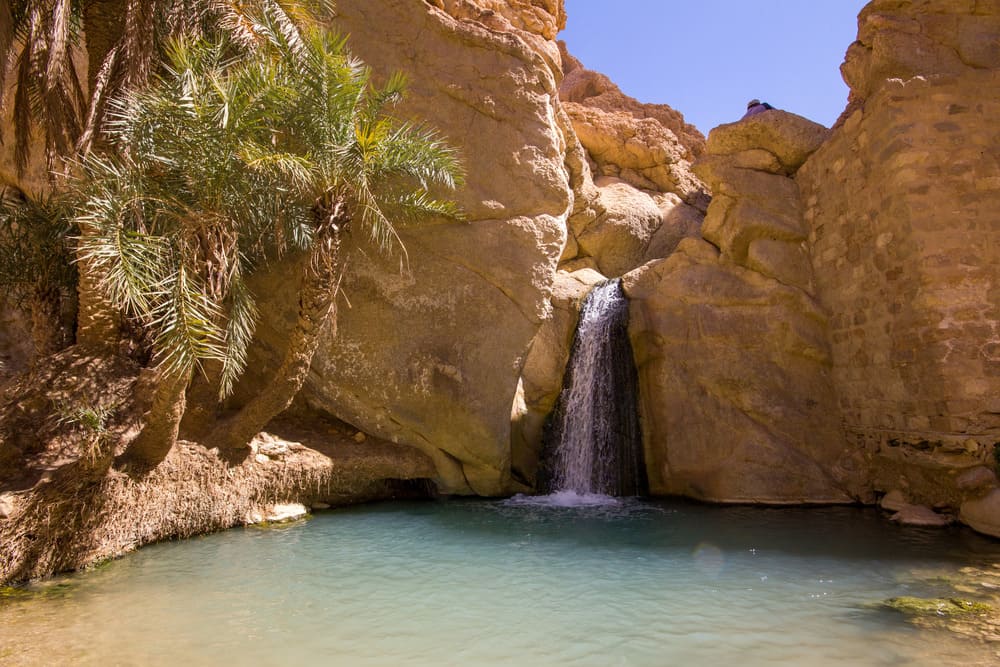
Chebika, Tamerza, and Midès — the wonders of the Southwest — are three oases known for their stunning beauty. They form a perfect harmony between the golden Sahara, lush palm groves, and ancient ruins, offering the ideal opportunity to escape and live an unforgettable adventure.

Chebika, a unique natural setting among mountains, palm trees, and a spring.
Chebika, a unique natural setting of mountains, palm trees, and water springs.

Tozeur: The Gateway to the South

A land of deep Saharan heritage, Tozeur stands out with its unique architecture, its ochre brick patterns, and its charming old quarters. For centuries, this city was a key stop along caravan routes. Walking through its streets, you can feel the echo of the desert and the spice trade of ancient times. Between museums, traditions, and warm hospitality, Tozeur offers a true immersion into desert culture — far beyond its landscapes.

The Forgotten North: Village of Art and History

Testour, the Andalusian Legacy

This charming town captivates every visitor. Located in northwestern Tunisia, it is just 1 hour and 10 minutes from Tunis. From the very beginning of the journey, the beauty of the surrounding nature sets the tone for the unique experience ahead.

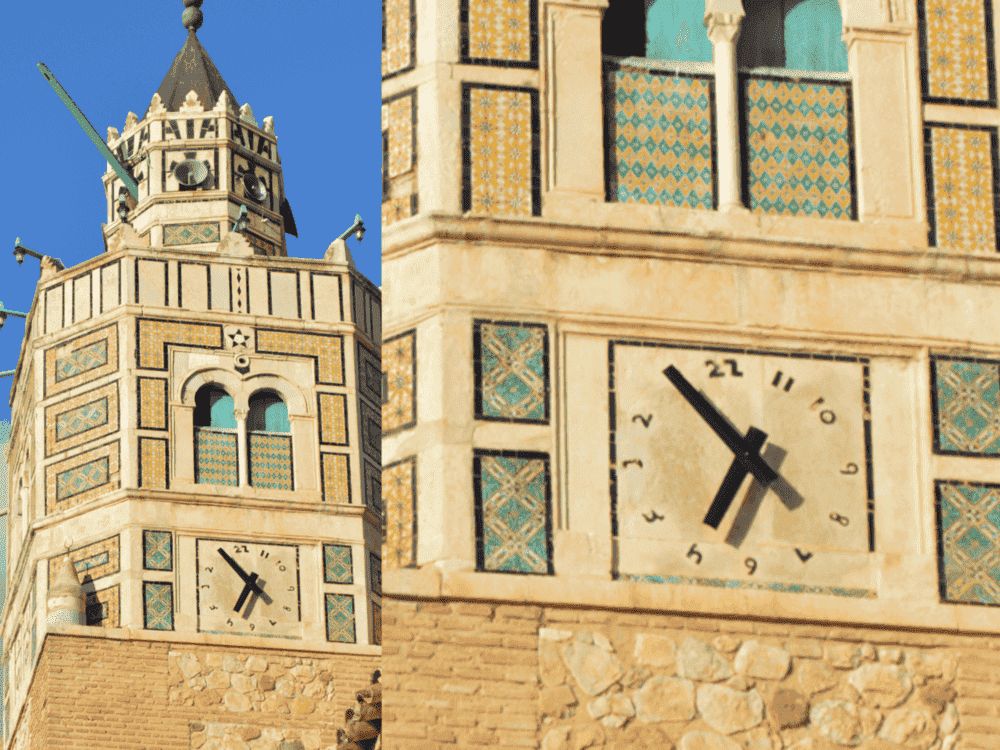
Upon arriving in Testour, you are greeted by a monument unlike any other in the world: the famous reverse clock, perched on the minaret of the Great Mosque. Built around 1630, during the golden age that followed the arrival of expelled Andalusian Moriscos, this nearly 395-year-old masterpiece is remarkable for its hands, which turn counterclockwise.

This rare and fascinating detail symbolizes the deep connection between Andalusian heritage and local history — reflecting both the nostalgia of exiled Moriscos and traditional conceptions of time and writing. More than a simple mechanism, this clock stands as a living symbol of Testour’s identity and cultural heritage.

Reversed clock of Testour in Tunisia, located on the minaret of the Great Mosque, an Andalusian historical monument.
The reverse clock of Testour, a historical symbol of Andalusian heritage.

Sejnane, the UNESCO-listed potters' village

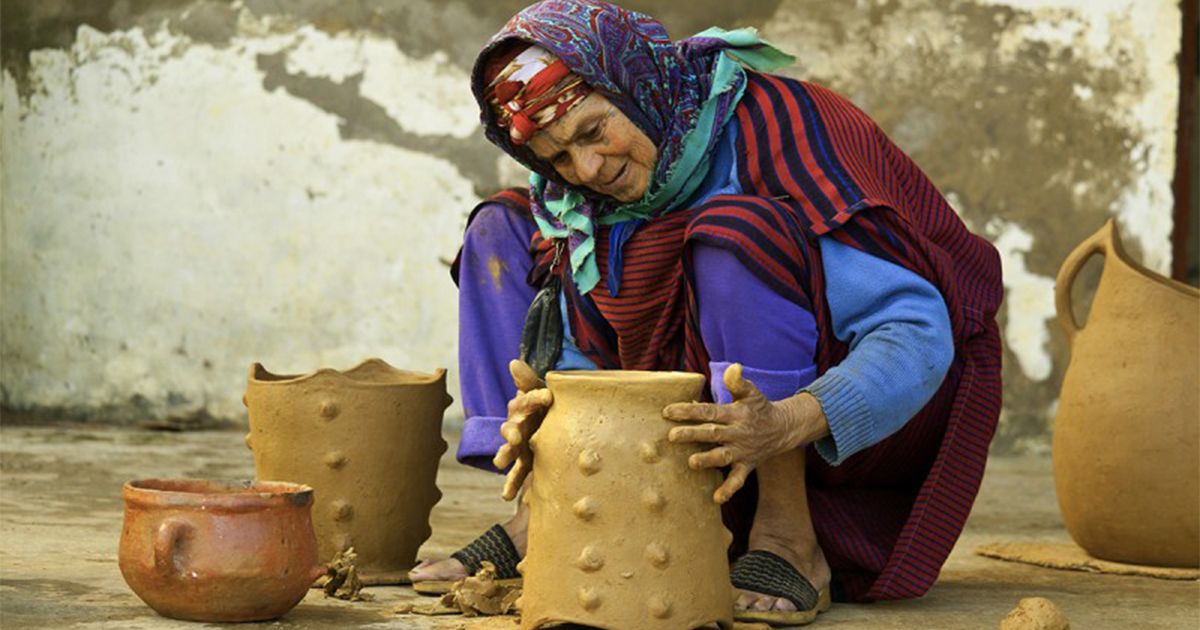
Still in northern Tunisia, this time in the governorate of Bizerte, lies Sejnane — a village renowned for its traditional craftsmanship that has gained international recognition. Its famous pottery is officially listed by UNESCO, highlighting its cultural importance and the richness of its ancestral know-how.

To this day, the inhabitants continue to practice age-old techniques, passed down through generations, using local materials and artisanal methods that have contributed to the village’s reputation across Tunisia and beyond.

Surrounded by green hills, olive groves, and forests, Sejnane offers picturesque landscapes ideal for hiking and reconnecting with nature. Its pure air and peaceful atmosphere make it a perfect destination for those seeking a break from the noise of the cities.

Sejnane woman potter making traditional pottery, classified by UNESCO, a symbol of Tunisian cultural heritage.
The traditional pottery of Sejnane, a craft passed down by the women of the village.

Dougga, Tunisia's Hidden Roman Soul

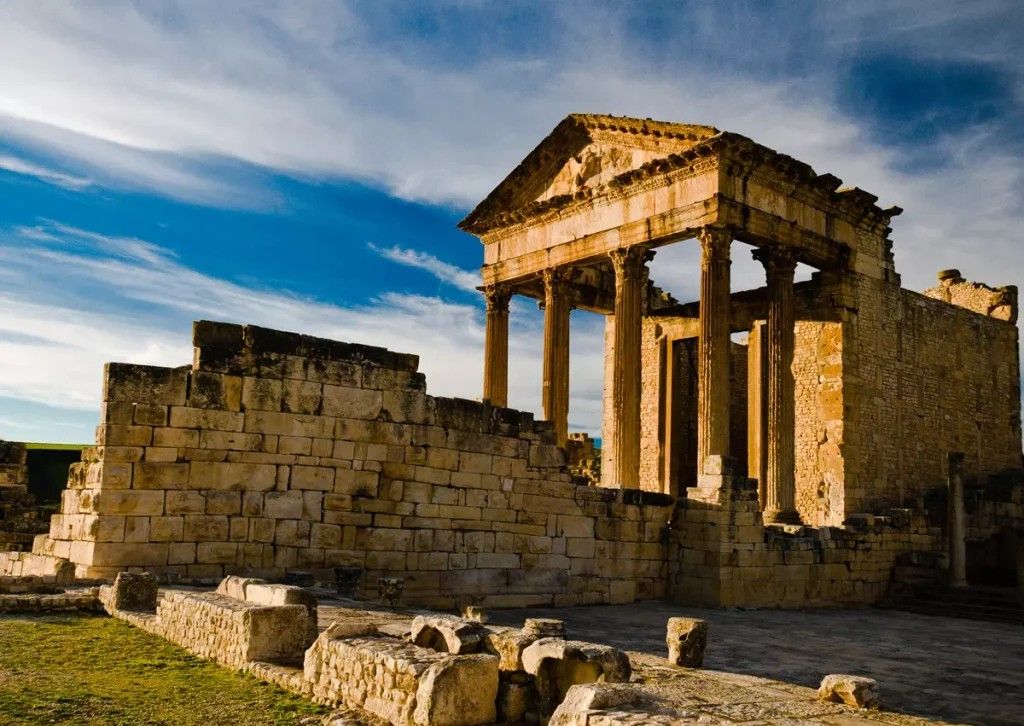
Listed as a UNESCO World Heritage Site, Dougga is one of the best-preserved archaeological sites in North Africa. Wandering through its ancient ruins — theatres, temples, bathhouses, and villas — feels like traveling through time and touching the grandeur of Roman civilization.

Every stone tells a story, and every column recalls a past enriched with culture and ancient traditions. History lovers and archaeology enthusiasts will find in Dougga a place where past and present come together in a unique and immersive experience.

Archaeological site of Dougga in Tunisia, well-preserved Roman ruins listed as a UNESCO World Heritage site.
Dougga, the ancient Roman city in the heart of Tunisia.

Experience the True Spirit of Tunisia

Tunisia is far more than its beaches or famous cities. From majestic deserts and lush oases to millennia-old villages and genuine human encounters, it holds treasures that few travelers ever discover.Every turn reveals a story, every landscape inspires wonder, and every encounter leaves a lasting memory.

With Open Tunisia, enjoy a unique and tailor-made experience: explore authentic villages, cross the desert by 4×4, sleep in Berber camps, and share unforgettable moments with locals.

Book your tour now and dive into the hidden treasures of Tunisia.

velo-tunisia

Discover Tunisia’s Beauty… On Two Wheels!

Discover Tunisia’s Beauty… On Two Wheels!

Exploring Tunisia by bike offers a unique and immersive way to experience the country’s rich landscapes, culture, and history. Whether you’re cycling through coastal towns, rolling hills, or the vast stretches of the desert, Tunisia presents an ideal setting for an adventurous and eco-friendly journey on two wheels.

1. The Coastal Beauty

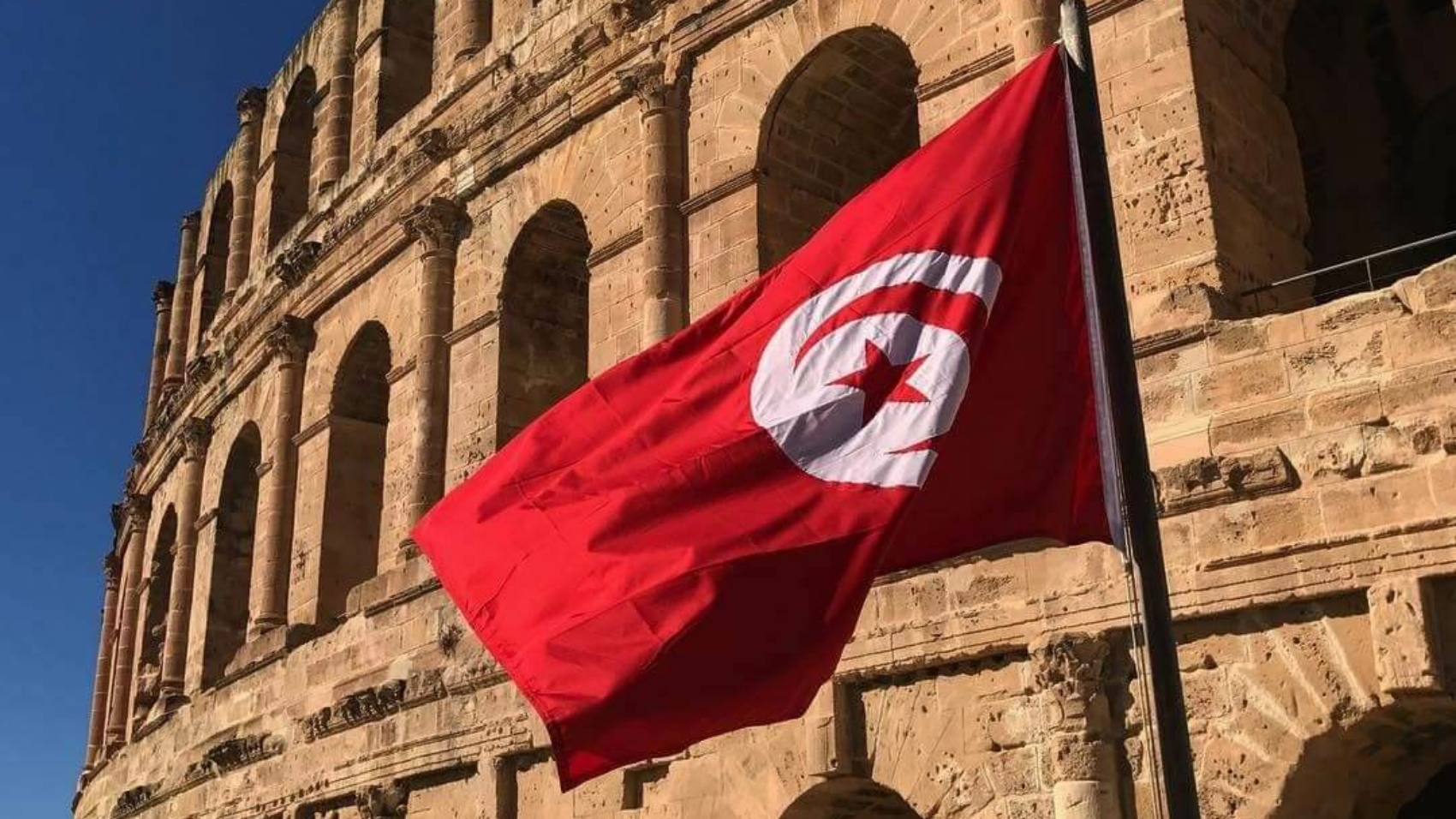
Cycling along Tunisia’s stunning Mediterranean coastline is a breathtaking experience. Routes that pass through cities like Hammamet, Sousse, and Monastir allow riders to enjoy scenic views of the sea, sandy beaches, and the relaxed coastal lifestyle. The mild climate, especially in spring and fall, makes it a perfect time for cycling trips. Along the way, cyclists can stop at historical sites such as El Jem, with its well-preserved Roman amphitheater, or enjoy fresh seafood in local seaside restaurants.

2. The Green North

The northern part of Tunisia, with its lush greenery and rolling hills, is ideal for those looking for nature and tranquility. Regions such as Tabarka and Aïn Draham are perfect for scenic bike routes through forests and mountains. These areas offer a stark contrast to Tunisia’s southern desert regions, with cooler temperatures and an abundance of flora and fauna. The countryside roads are perfect for cycling, and you can explore quaint villages and enjoy the hospitality of local communities.

3. The Adventure of the Sahara

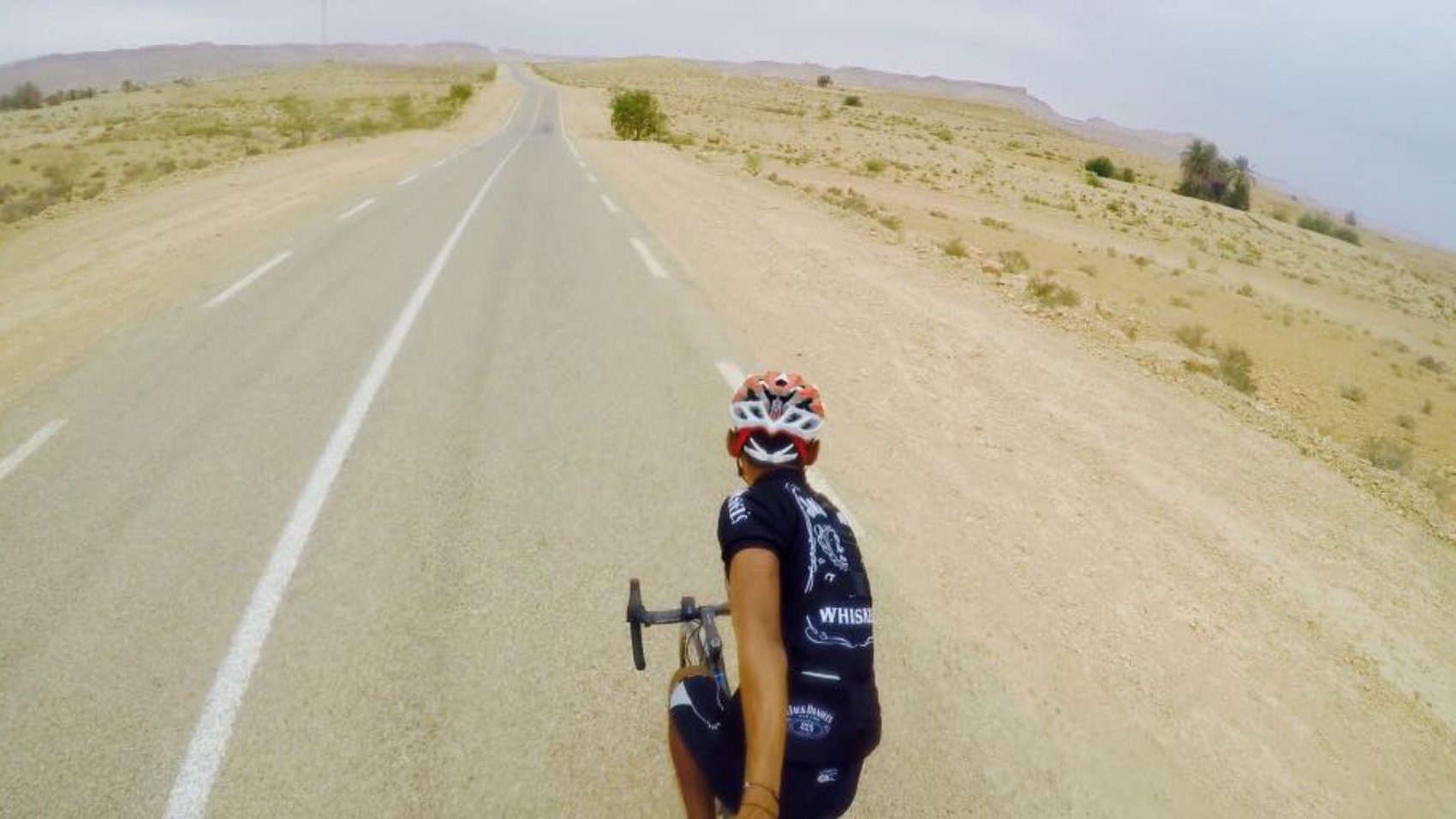
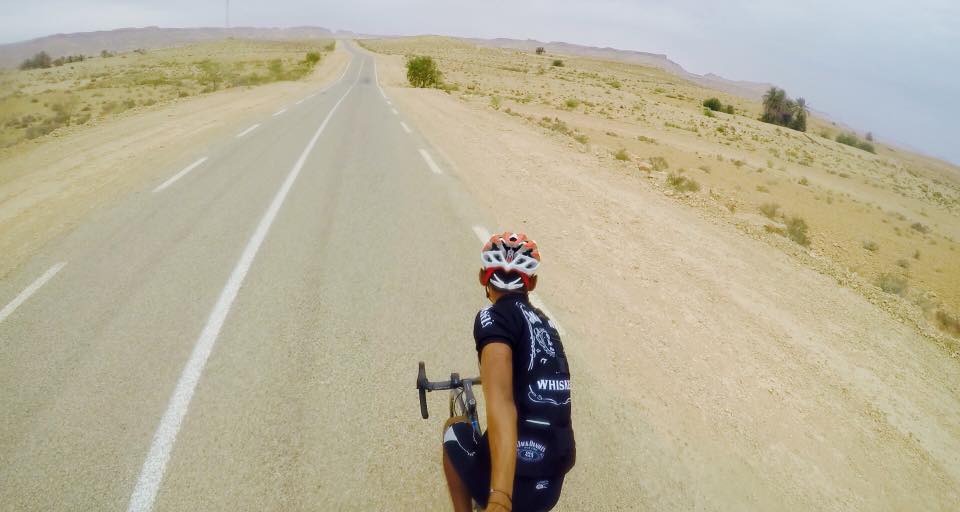
For those looking for a more challenging ride, the vast expanses of the Tunisian Sahara offer an unforgettable cycling adventure. Starting from towns like Douz, often called the “Gateway to the Sahara,” cyclists can experience the vastness of the desert, passing through oases and experiencing the solitude and beauty of the Sahara. While the heat can be intense, early morning or late afternoon rides reveal a desert landscape that is both stunning and serene.

4. Practical Tips for Cycling in Tunisia

  • Best Time to Cycle: The ideal times for cycling are spring (March to May) and autumn (September to November) when the weather is mild.
  • Safety: While many roads are bike-friendly, it’s essential to stay cautious on busy highways. Rural roads offer safer and more peaceful cycling experiences.
  • Equipment: You can bring your own bike or rent one from local operators. Make sure to carry enough water, especially when cycling in rural or desert areas.
  • Cultural Sensitivity: When cycling through rural or more conservative areas, dress modestly and respect local customs.

Conclusion

Exploring Tunisia by bike allows you to see the country from a different perspective. From coastal rides to desert adventures, cycling is a fantastic way to connect with the diverse landscapes and cultures of Tunisia. Whether you’re a casual rider or an experienced cyclist, Tunisia’s beauty and charm truly come alive on two wheels.

discover the Sahara Desert

The Sahara Desert in Tunisia: A Journey into the Heart of the Desert

discover the Sahara Desert

The Sahara Desert in Tunisia: A Journey into the Heart of the Desert

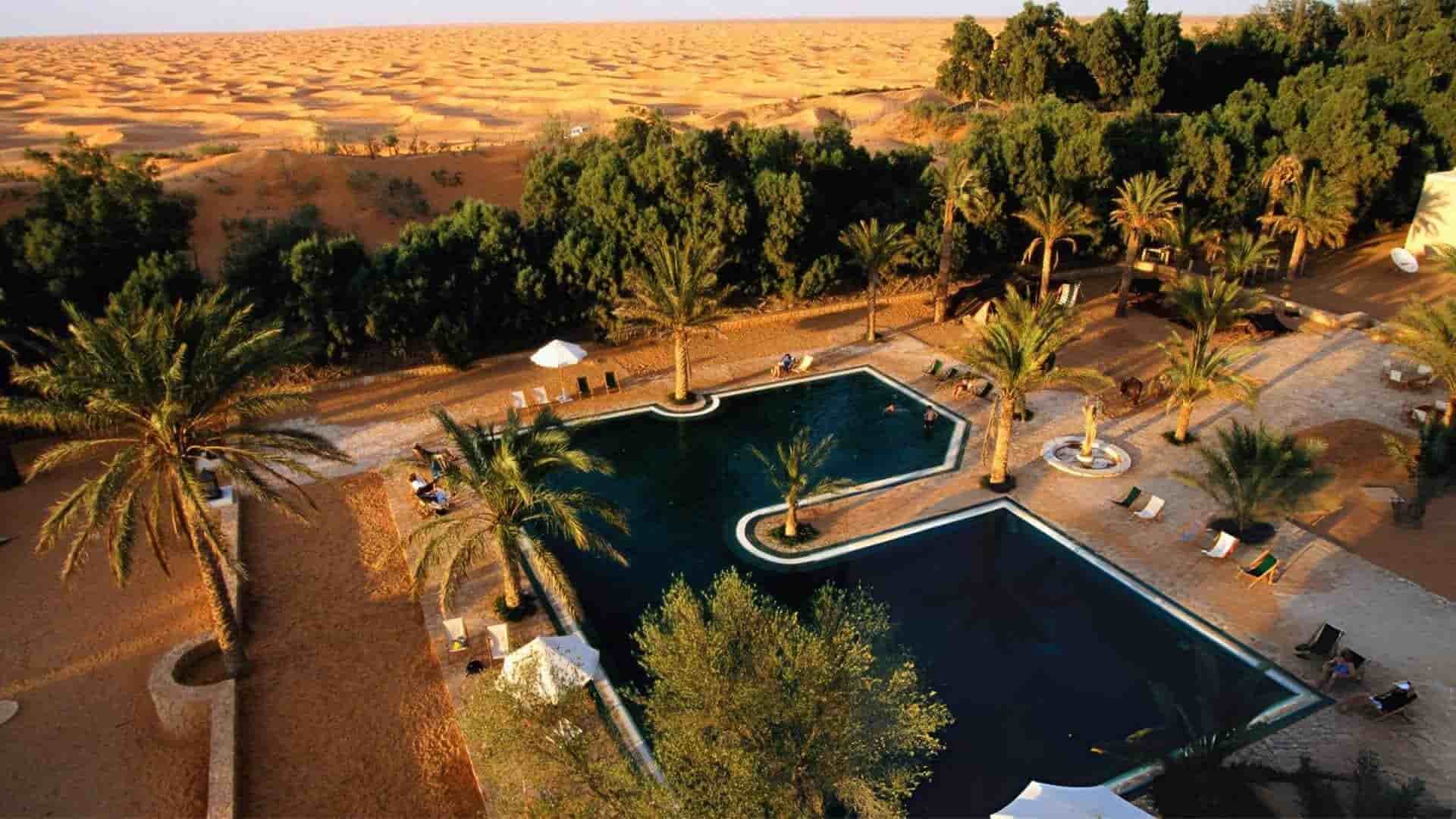
The Sahara Desert, stretching across the northern region of Africa, is one of the world’s most iconic natural wonders. In Tunisia, the Sahara occupies a significant portion of the southern part of the country, offering travelers a unique opportunity to experience the beauty, culture, and adventure of the desert. From vast sand dunes to historical oases, the Tunisian Sahara is a place of contrast and enchantment.

1. The Gateway to the Sahara: Douz

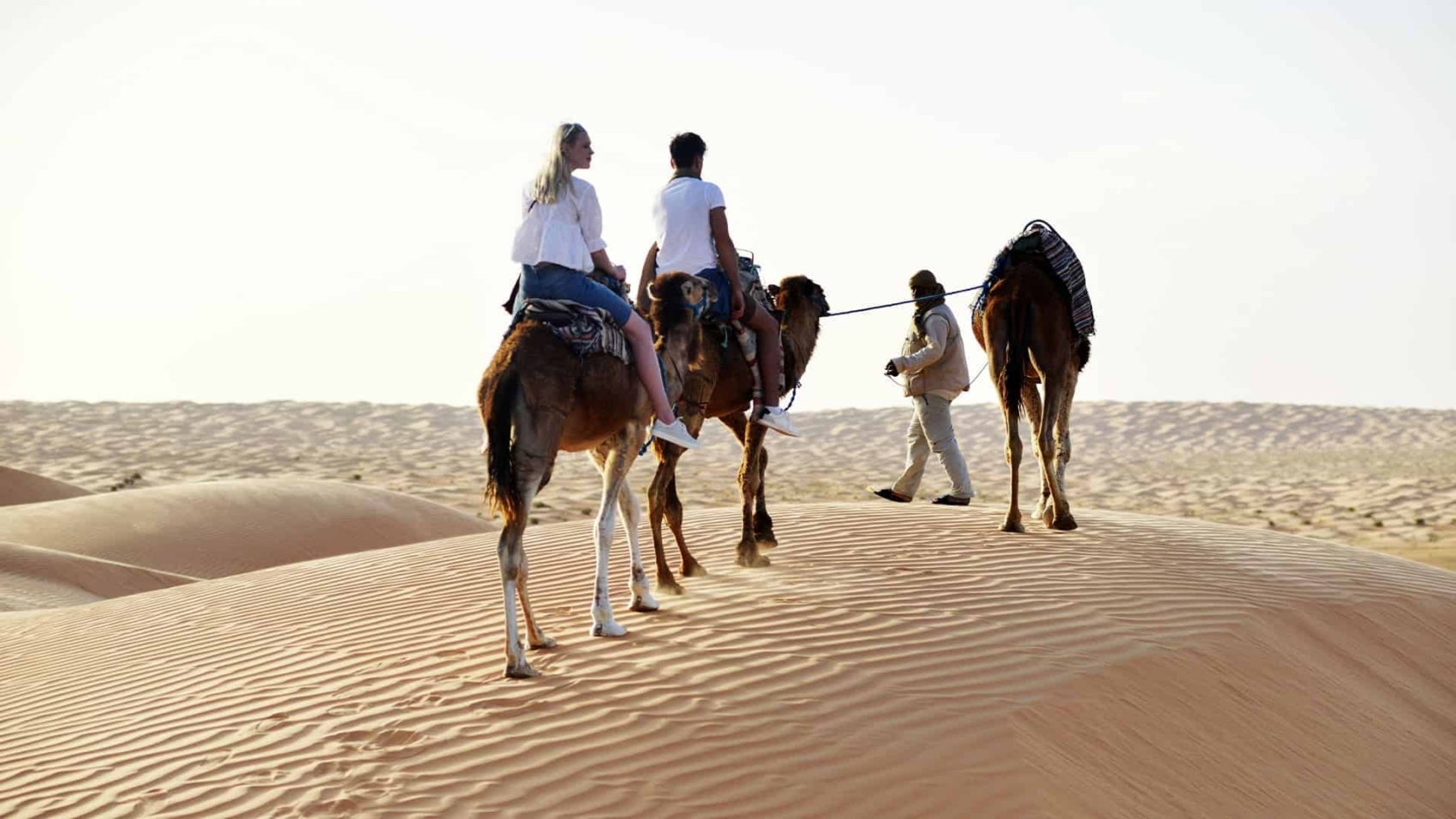
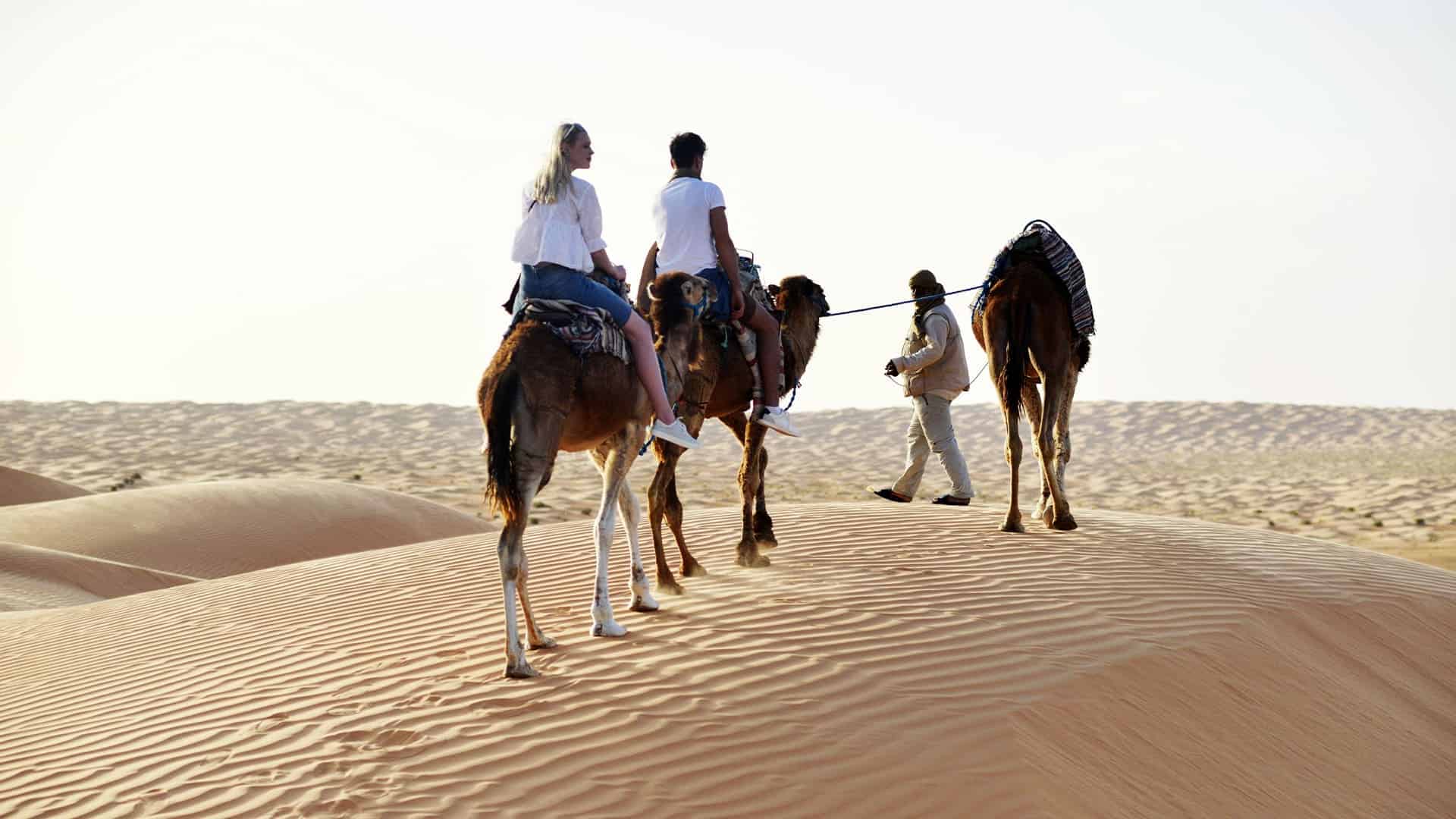
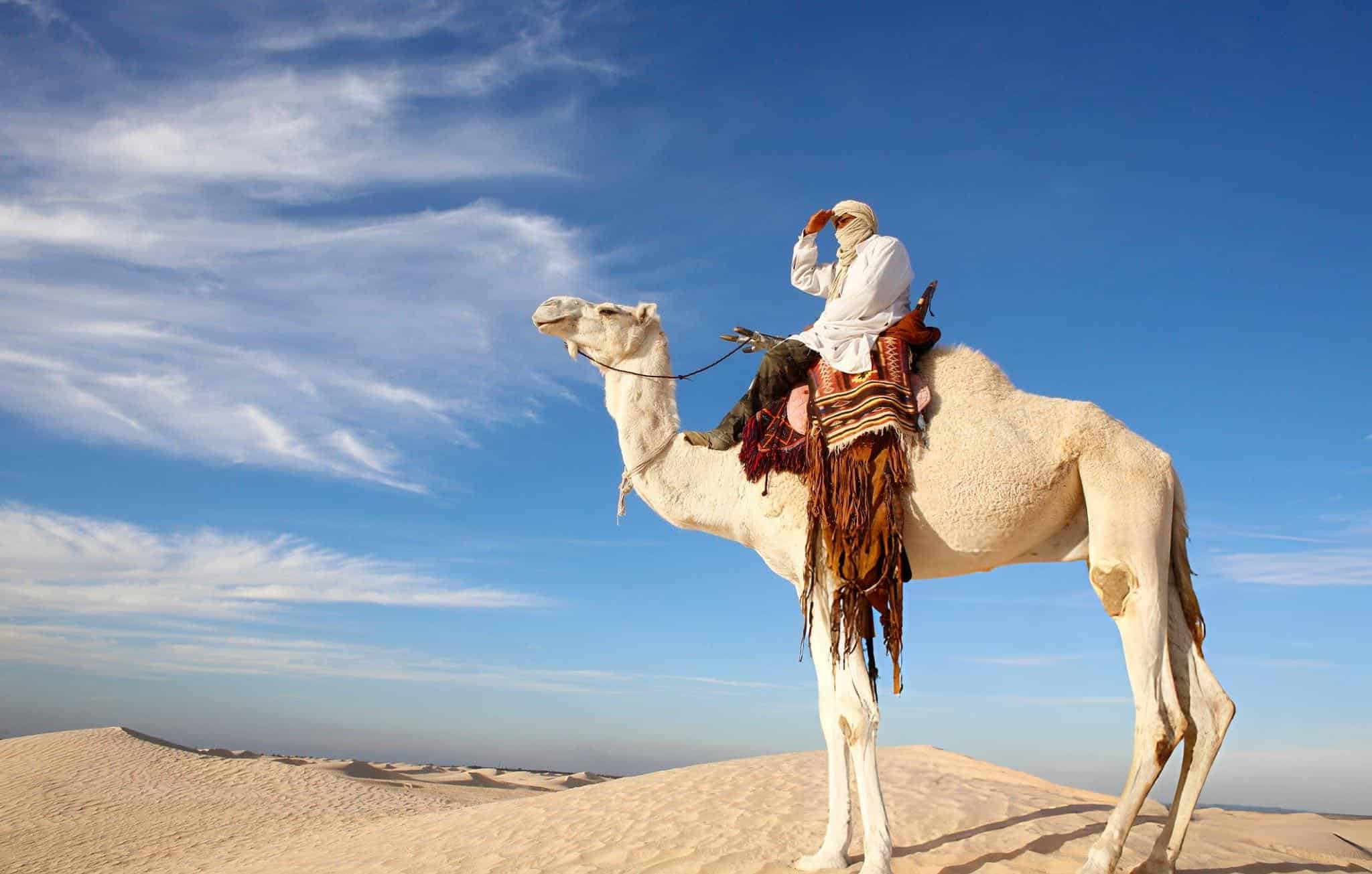
Often referred to as the “Gateway to the Sahara,” Douz is a small desert town that serves as a starting point for many desert excursions. The annual Festival of the Sahara attracts thousands of visitors, celebrating traditional desert culture with camel races, music, and folk performances. Visitors can take a camel ride through the dunes, hike across the sands, or even embark on a 4×4 adventure to explore deeper into the desert.
2. The Magic of the Sand Dunes

The vast, golden sand dunes of the Tunisian Sahara, such as those near Ksar Ghilane, provide a picturesque setting for adventure seekers. These dunes are perfect for activities like sandboarding, quad biking, and trekking. As the sun sets, the landscape transforms into a serene and majestic expanse, making it a perfect spot for desert camping under the stars.

3. Historical Oases and Berber Villages

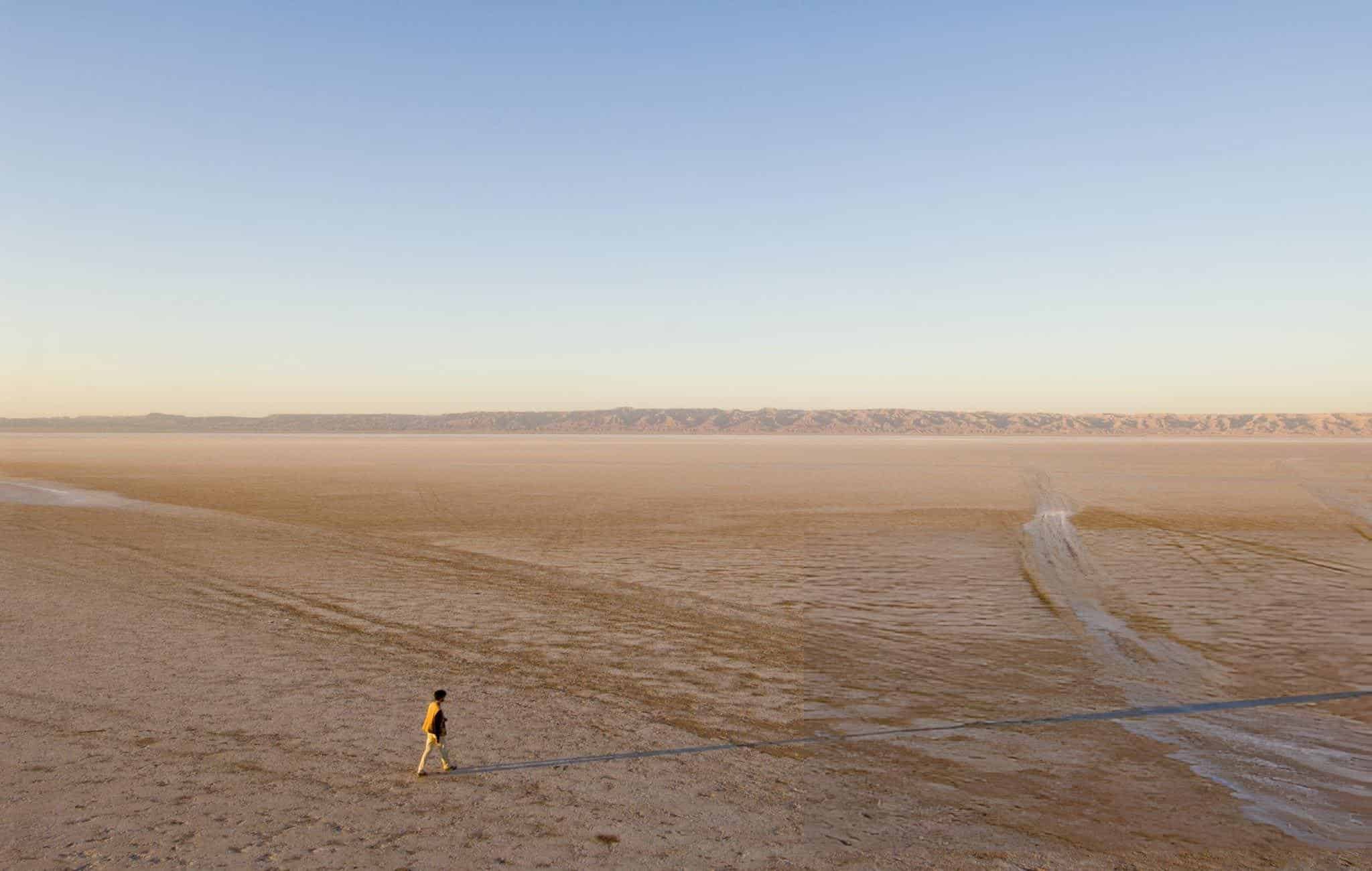
Throughout the desert, visitors can discover ancient oases and Berber villages that have stood the test of time. Tozeur and Nefta are two of the most famous oases in Tunisia, known for their lush date palm groves and historical architecture. The Chott El Jerid, the largest salt lake in the Sahara, offers a mesmerizing sight, especially during sunset when the lake’s surface shimmers in hues of pink and orange.

4. Desert Film Locations

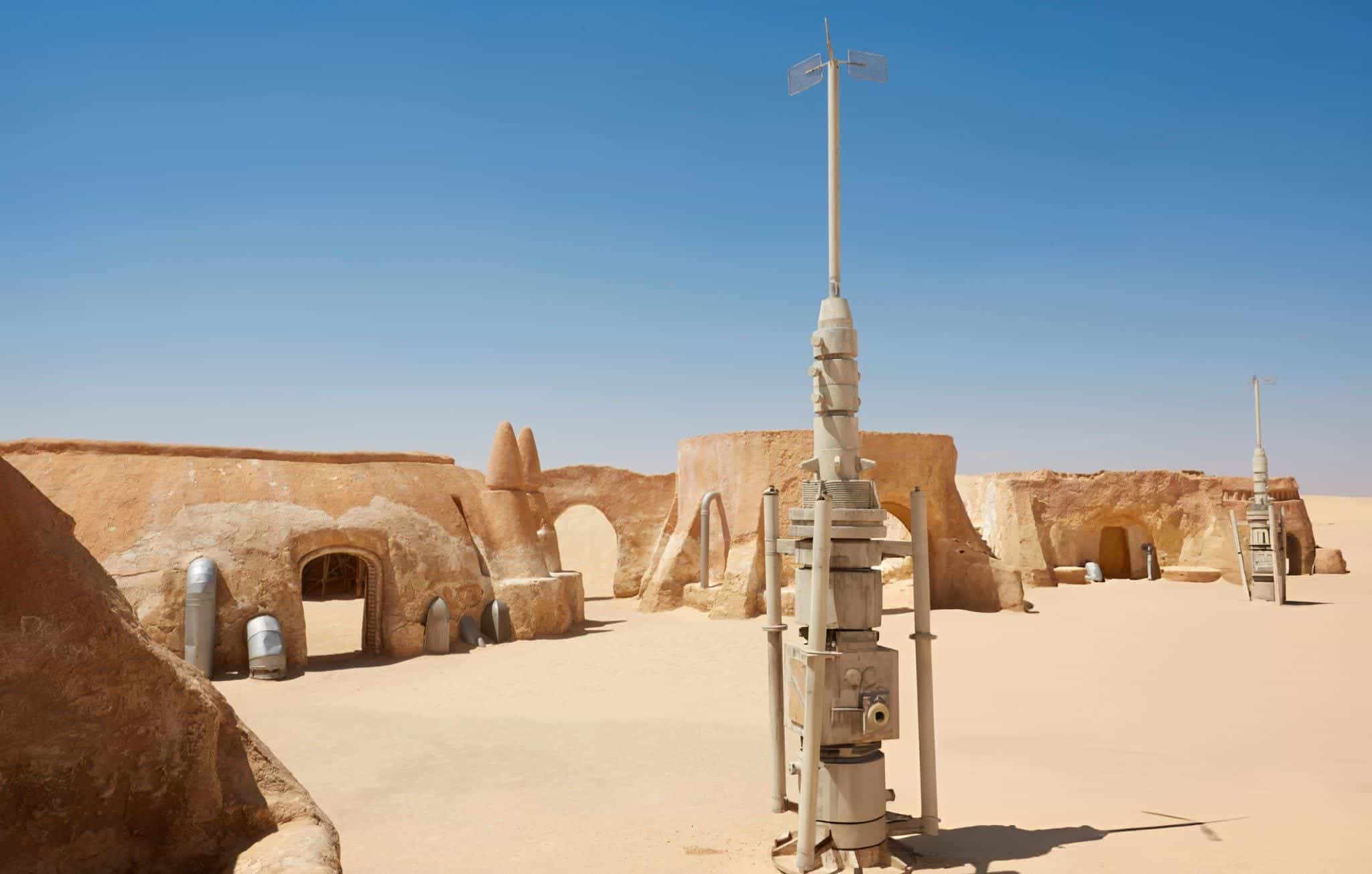
The Tunisian Sahara has also made a name for itself as a popular film location. Fans of the Star Wars series will be delighted to visit Ong Jmal, the filming location of the planet Tatooine, where the desert’s otherworldly landscape was used to bring the famous sci-fi scenes to life.

5. The Cultural Experience

Exploring the Sahara is not just about the scenery; it’s about experiencing the rich culture and history of the people who have called this region home for centuries. The nomadic Bedouin tribes still inhabit parts of the desert, and visitors can learn about their way of life, including traditional handicrafts, music, and cuisine. A night spent in a Bedouin tent is an unforgettable experience that immerses visitors in the authentic desert lifestyle.
Conclusion

The Sahara Desert in Tunisia is a place of wonder and discovery. Whether you’re looking for adventure, cultural immersion, or tranquility, the desert provides a unique experience that resonates with visitors long after they leave. With its stunning landscapes, rich history, and vibrant culture, the Tunisian Sahara is truly a destination worth exploring.

thalasso_&_spa

Tunisia: A Top Destination for Seawater Thalassotherapy Treatments

A Top Destination for Seawater Thalassotherapy Treatments

Tunisia: A Top Destination for Seawater Thalassotherapy Treatments

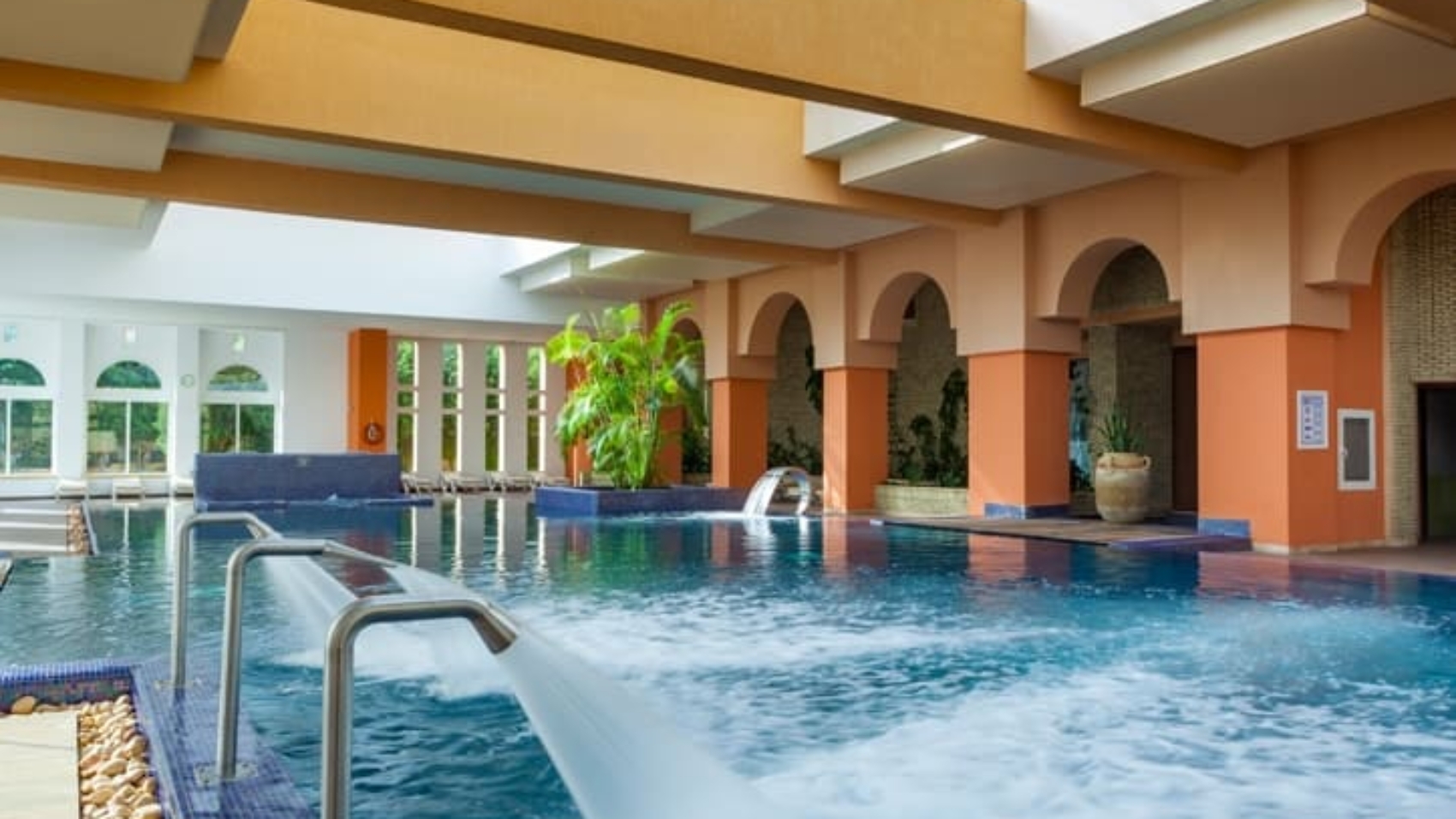
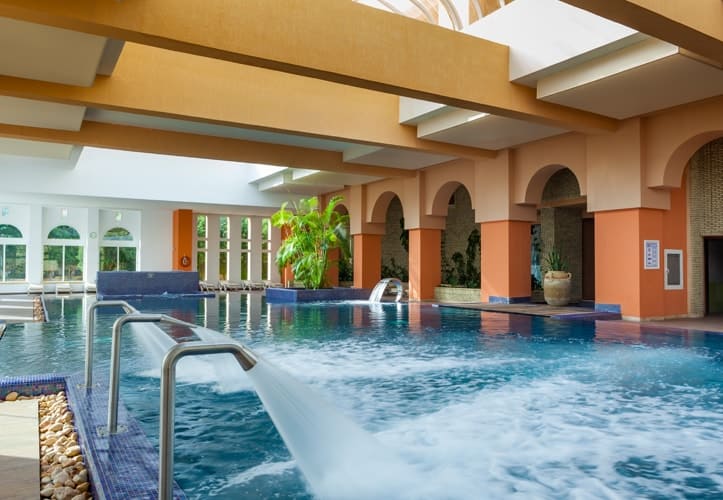
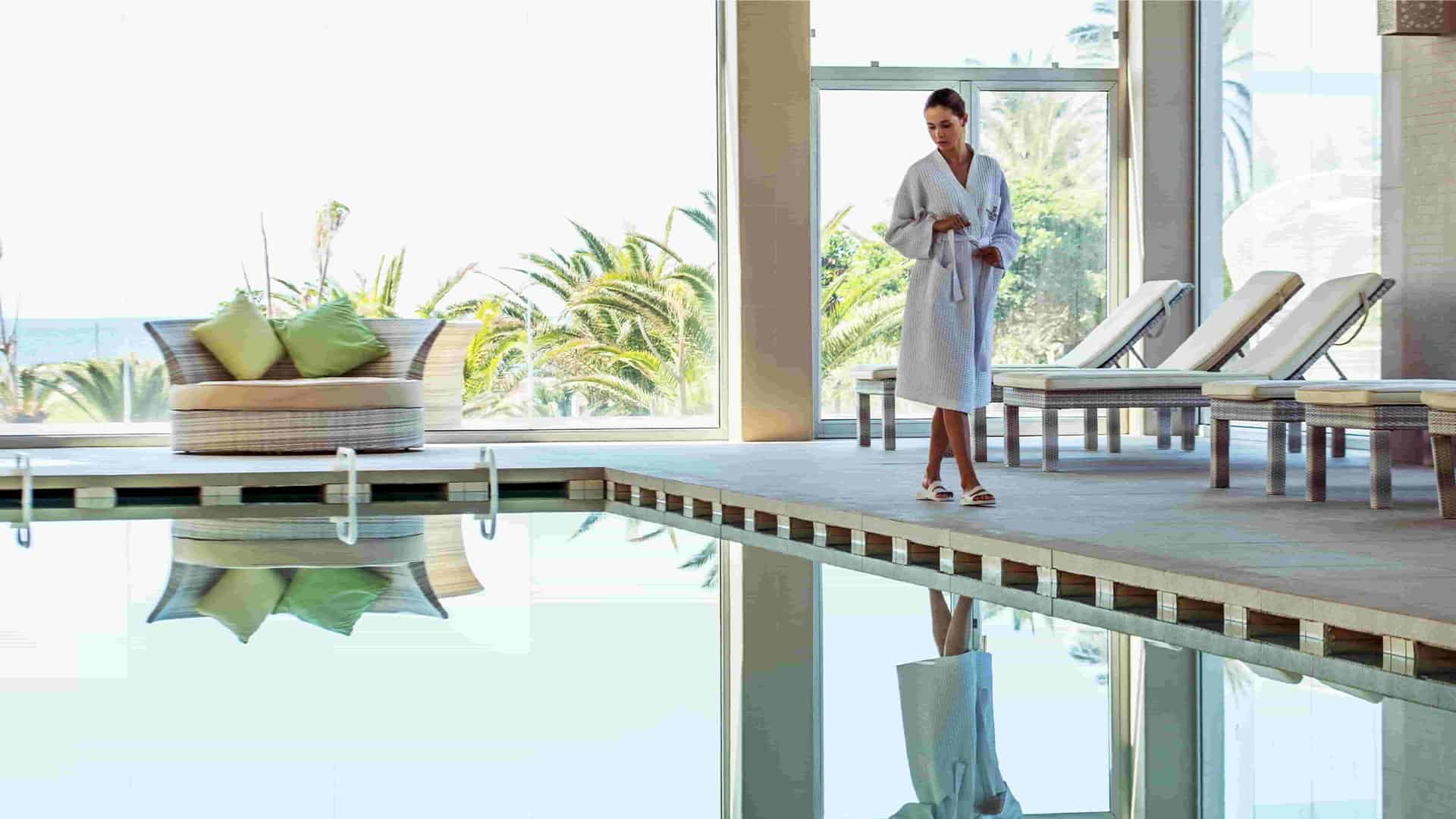
Tunisia has long been recognized as a premier destination for thalassotherapy, attracting visitors from around the world seeking the therapeutic benefits of seawater treatments. The country’s rich history, stunning coastline, and advanced thalassotherapy centers make it an unparalleled choice for those looking to rejuvenate both body and mind.
A Tradition of Healing

Thalassotherapy, derived from the Greek words “thalassa” (sea) and “therapeia” (therapy), uses the natural healing properties of seawater, marine mud, and algae. Tunisia has embraced this tradition, offering state-of-the-art facilities that combine modern medical practices with ancient healing techniques.

Top Thalassotherapy Centers

Tunisia boasts numerous top-rated thalassotherapy centers, particularly along the Mediterranean coast. Cities like Hammamet, Sousse, and Djerba are home to luxurious resorts and specialized wellness centers that provide a range of treatments, from hydrotherapy and seaweed wraps to massages and beauty treatments. These centers are staffed with highly trained professionals, ensuring guests receive the best care possible.

Benefits of Thalassotherapy

The benefits of thalassotherapy are well-documented, including improved circulation, detoxification, relief from chronic pain, and enhanced skin health. The mineral-rich seawater and marine products used in these treatments are known to have therapeutic properties that can help with conditions such as arthritis, eczema, and stress-related ailments.

A Destination Beyond Wellness

While thalassotherapy is a significant draw, Tunisia offers much more to visitors. The country’s rich cultural heritage, historical sites, vibrant markets, and delicious cuisine make it a comprehensive travel destination. Visitors can explore ancient Roman ruins, wander through bustling souks, or relax on pristine beaches, making their stay both enriching and relaxing.

Conclusion

Tunisia continues to be an unmissable destination for those seeking the benefits of thalassotherapy. Its combination of advanced wellness facilities, natural beauty, and cultural richness ensures that visitors not only heal their bodies but also enrich their souls. Whether you’re a seasoned thalasso enthusiast or new to the practice, Tunisia’s unique offerings make it a must-visit location for rejuvenation and relaxation.