
Tunisia in October offers a pleasant balance between milder temperatures, fewer crowds, and a variety of ways to experience the country. As summer fades, the weather generally becomes more comfortable for sightseeing and outdoor activities, while the Mediterranean coast can still offer opportunities for beach days and swimming when conditions are favourable. October is also a good time to explore Tunisia’s historical sites, cultural heritage, and southern desert landscapes at a more comfortable pace.
Planning a trip to Tunisia in October? Where should you go, what can you do, and what kind of weather should you expect? From exploring the historic streets of Tunis and the Roman amphitheatre of El Jem to experiencing the desert landscapes around Douz, this guide covers everything you need to know about visiting Tunisia in October — including temperatures, destinations, things to do, swimming conditions, what to pack, and practical travel tips.
What Is the Weather Like in Tunisia in October?
The weather in Tunisia in October marks a transition from the hot summer months to milder autumn conditions. While the overall climate becomes more comfortable, conditions can vary considerably depending on the region and throughout the month. Temperatures, rainfall, sunshine, and sea conditions can all influence what you experience during your trip.
To understand what October is like across the country, it is useful to look first at temperatures, then at how warm the weather actually feels, before considering rainfall, sunshine, and sea conditions.
Tunisia Temperature in October
October marks a noticeable change from Tunisia’s hottest summer period, with temperatures becoming more moderate across much of the country. However, there is no single temperature that represents the whole of Tunisia. Conditions differ between the north, the Mediterranean coast, the central regions and the warmer areas of the south.
In general, daytime temperatures in October are around the mid-20s °C in many northern and coastal destinations, while southern areas can remain considerably warmer. Tozeur, for example, can reach daytime highs of around 31°C, whereas places such as Tunis and Sousse generally remain in the mid-to-high 20s.
Evenings are cooler than afternoons, and the difference becomes more noticeable when travelling between regions. In the south, nights can remain relatively mild, while northern and inland destinations can feel cooler. If your itinerary includes several parts of Tunisia, packing both light daytime clothing and an extra layer for the evening is therefore useful.
Here is a general idea of average temperatures in Tunisia in October:
| Destination | Average daytime temperature |
Average night temperature |
La source |
|---|---|---|---|
| Tunis | 25°C | 18°C | Timeanddate ( https://www.timeanddate.com ) |
| Hammamet | 24°C | 18°C | Climate data ( https://fr.climate-data.org/afrique/tunisie/nabeul/hammamet-29387/t/octobre-10/ ) |
| Sousse | 27°C | 17°C | Climate data ( https://fr.climate-data.org/afrique/tunisie/sousse-410/r/octobre-10/ ) |
| Mahdia | 27°C | 19°C | Climate data ( https://fr.climate-data.org/afrique/tunisie/mahdia/mahdia-3553/t/octobre-10/ ) |
| Djerba / Midoun |
27°C | 21°C | Climate data ( https://fr.climate-data.org/afrique/tunisie/medenine/midoun-29383/t/octobre-10/ ) |
| Tozeur | 29°C | 18°C | Climate data ( https://fr.climate-data.org/afrique/tunisie/tozeur-358/r/octobre-10/ ) |
For travellers planning an itinerary, this regional difference is useful to keep in mind. Northern Tunisia generally has milder conditions, while the central and southern regions can remain warmer in October. If your trip combines coastal towns, historical sites and the Sahara, you may therefore experience noticeably different temperatures from one destination to another.
So, is Tunisia hot in October? It can still feel warm, particularly during sunny afternoons, but October generally offers a more moderate climate than the peak summer months.
Rainfall, Sunshine & Sea Temperature in October
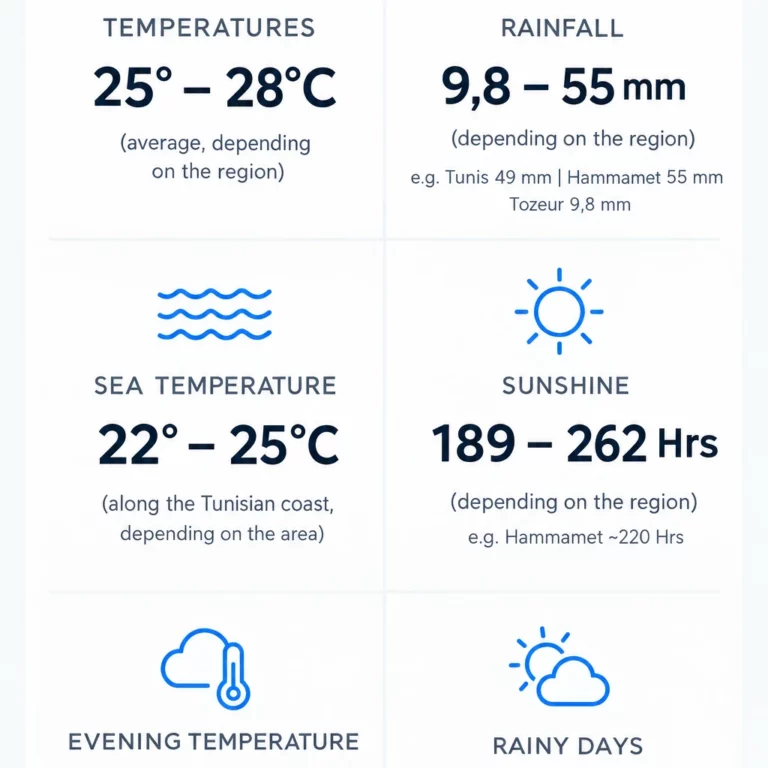
Rainfall becomes more relevant in Tunisia in October, but it varies considerably from one part of the country to another. Northern and coastal areas generally receive more rain than the south, where conditions remain much drier. For example, long-term climate data show around 49 mm of rainfall in Tunis and 55 mm in Hammamet during October, while Tozeur averages around 9.8 mm.
This does not mean that October is a rainy month throughout Tunisia. Rain can occur in the north and along the coast, but it is often mixed with periods of sunshine. In Hammamet, for example, October averages around 220 hours of sunshine, while sunshine levels across Tunisia can vary from about 189 hours in El Kef to 262 hours in Gabès.
The sea temperature in Tunisia in October also remains relatively mild. Across the Tunisian coastline, average sea temperatures are around 22°C to 25°C, depending on the location. The water tends to be warmer around the southern and eastern coasts, with Djerba reaching around 25°C, while Bizerte can be closer to 22°C.
This means that swimming in Tunisia in October can still be possible, particularly on sunny and calm days, but the experience can vary depending on the destination and the weather. A rainy or windy day may make the beach less appealing even when the sea itself remains relatively warm.
Overall, October offers a mix of sunny periods and occasional rainfall rather than one consistent weather pattern across the country. The further north you travel, the more important it becomes to allow for changing conditions, while southern destinations generally remain drier.
Is October a Good Time to Visit Tunisia?
October can be a comfortable time to visit Tunisia, especially for travellers who want to enjoy the country without the intense heat of the summer months. With milder temperatures, a mix of sunny and rainy days, and fewer visitors in many places, the month offers a different experience from the busy summer season. However, what you can expect will depend on your destination and the type of activities you have planned.
Why Visit Tunisia in October?
October can be a practical time to discover different sides of Tunisia in the same trip. Rather than focusing on one type of holiday, travellers can combine cultural sightseeing, outdoor activities and time by the coast, depending on their interests and itinerary.
The month can also offer a quieter atmosphere than the main summer season. Some coastal and tourist areas become less busy, which can make it easier to explore at a more relaxed pace. For travellers interested in going beyond the main resort areas, October can also be a convenient period to include inland and southern destinations in their itinerary.
Another advantage is the variety of experiences available at this time of year. A single trip can include historic sites and medinas, natural landscapes, local cultural experiences, and excursions towards the Sahara. Beach days and swimming remain possible when conditions are favourable, but October is better suited to travellers who want to combine coastal time with other types of experiences rather than plan their entire holiday around the beach.
What to Expect in October
October is a transition month, so conditions can vary depending on both the region and the time of the month. Northern and coastal areas can experience occasional rainfall, while the south generally remains drier. Daytime temperatures are usually more comfortable than during the peak summer months, although warm conditions can still occur, particularly in southern and inland areas.
You can therefore expect a combination of warm days, cooler evenings, and changing weather. For example, Hammamet averages around 25°C during the day in October, while Tozeur averages around 28°C, showing why conditions can feel quite different depending on where you travel.
Rain is another factor to keep in mind, especially in the north and along parts of the coast. October is among the wetter months in places such as Tunis and Hammamet, although rainfall does not necessarily last throughout the day.
In practical terms, travellers should be prepared for regional differences rather than expect the same conditions everywhere. Light clothing works well for warmer days, while an extra layer is useful in the evening, and keeping some flexibility in outdoor plans can be helpful when rain is forecast.
Where to Go in Tunisia in October
October is a good month to explore different parts of Tunisia, as the milder weather makes travelling beyond the main coastal resorts more comfortable. From historic cities and archaeological sites to mountain landscapes and the Sahara, the country offers a wide range of experiences during this period.
The best destination for your trip will depend on what you want to experience. Tunis is a natural choice for history and culture, while places such as Kairouan and El Jem are ideal for discovering Tunisia’s heritage. Further south, Tozeur and Douz offer a completely different atmosphere, with oases, salt flats and desert landscapes that are particularly suitable for exploration in autumn.
Best Coastal Destinations in October
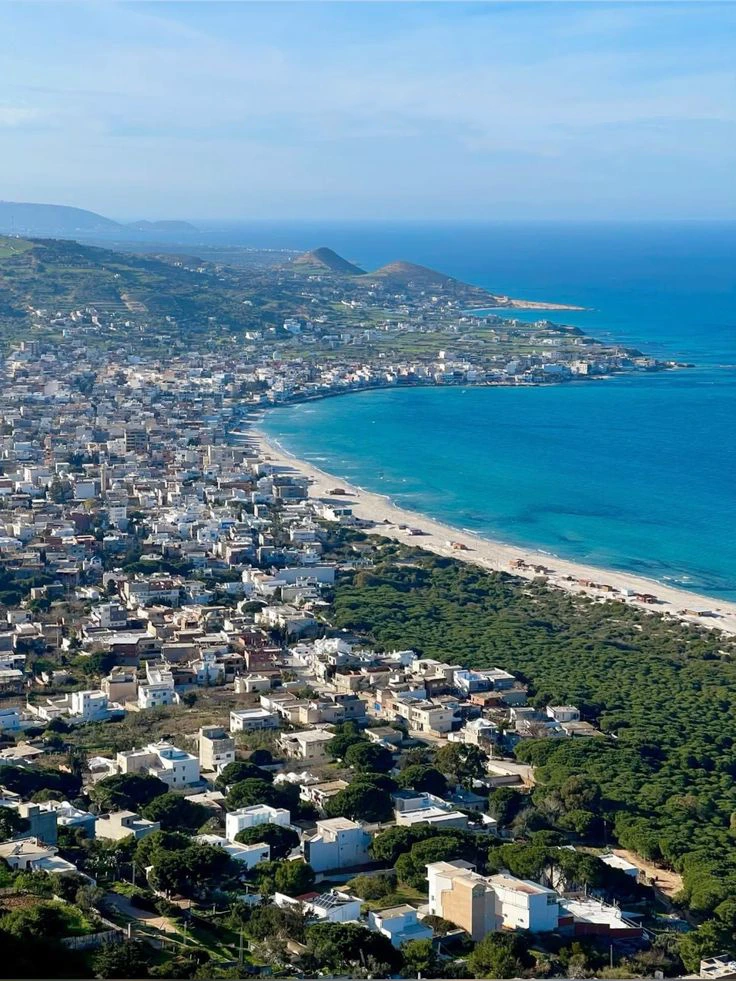
If you still want to enjoy the Mediterranean coast, October offers several options beyond Tunisia’s busiest summer resorts. With warm daytime temperatures and a generally quieter atmosphere, coastal cities can be a good choice for combining seaside time with culture and sightseeing.
Mahdia is a particularly interesting option for travellers looking for a more relaxed coastal setting. Its long sandy beaches, historic medina, and waterfront around Cap Afrique make it possible to combine beach time with cultural discoveries. In October, daytime temperatures average around 27°C, with cooler evenings.
Sousse offers a different experience, combining a Mediterranean beachfront with a historic medina, the Ribat, and archaeological attractions. October temperatures average around 27°C during the day, making it possible to combine coastal activities with sightseeing.
Monastir is another option along the central coast, particularly for travellers interested in history as well as the sea. With average daytime temperatures of around 28°C in October, the city can work well for a mix of waterfront walks, cultural visits, and outdoor exploration.
Further north, Bizerte offers a different coastal atmosphere. Its old port, medina, beaches, and nearby natural landscapes make it suitable for travellers who want to explore beyond the classic resort areas. October is generally warm but slightly cooler than the central coast, with average daytime temperatures around 25°C.
These destinations also show why where to go in Tunisia in October depends on the type of trip you want. Mahdia and Sousse can suit a combination of beach and sightseeing, Monastir adds a strong historical dimension, while Bizerte offers a more northern and less resort-focused coastal experience.
Best Places for Culture and History
October is also a good opportunity to explore Tunisia’s cultural and historical heritage, particularly when the milder temperatures make walking through old cities and archaeological sites more comfortable. From ancient Roman monuments to historic medinas and Islamic architecture, several destinations offer a deeper look into the country’s past.
Tunis is a natural starting point for a cultural itinerary. Its historic medina is home to numerous monuments, including mosques, palaces, madrasas, souks, and traditional houses. Walking through its narrow streets allows visitors to discover different layers of Tunisian history and architecture within a relatively compact area.
Kairouan offers a different perspective, with a heritage strongly connected to the early history of Islamic civilisation in North Africa. The city is best known for the Great Mosque of Kairouan, also known as the Okba Ibn Nafaa Mosque, one of the most important landmarks of Islamic architecture in the Maghreb. Visitors can also discover the historic medina, the Aghlabid Basins, and the Mosque of the Three Gates, making Kairouan an important destination for discovering Tunisia’s religious and cultural heritage.
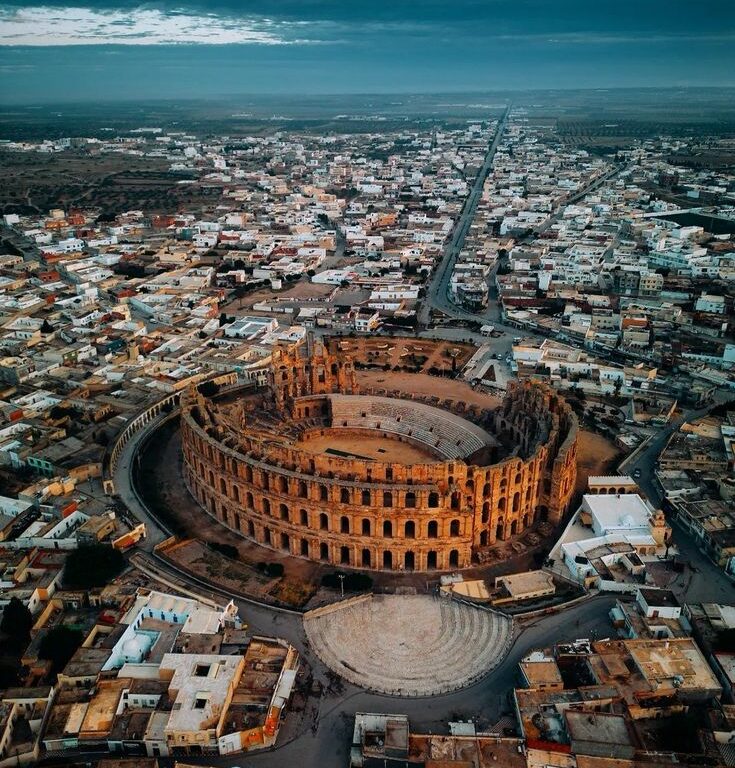
For travellers interested in Roman history, El Jem is another important stop. Its enormous amphitheatre, built in the 3rd century, is one of the most impressive Roman monuments in Tunisia and could accommodate an estimated 35,000 spectators. The site provides a striking contrast with the country’s later Islamic and Arab architectural heritage.
Together, Tunis, Kairouan, and El Jem offer very different perspectives on Tunisia’s history, from ancient Roman civilisation to Islamic architecture and traditional urban heritage. October’s generally more moderate conditions can also make this type of cultural itinerary more comfortable for travellers who want to spend time exploring historical sites and cities.
Best Destinations for a Desert Experience
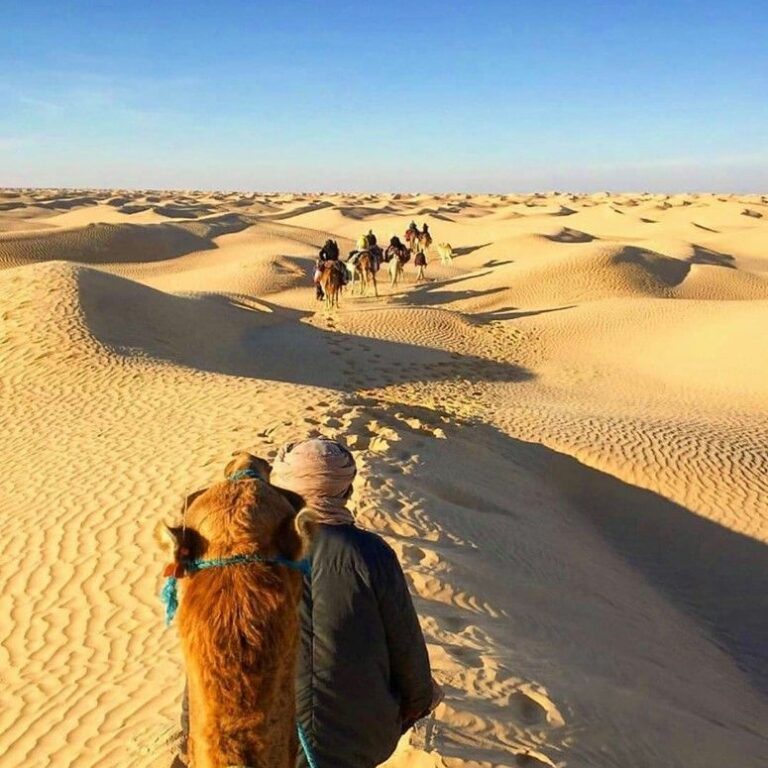
For travellers looking beyond the coast, southern Tunisia offers a very different side of the country, with vast desert landscapes, palm-filled oases, and traditional desert towns. October is a suitable period for exploring the Sahara, as conditions are generally more comfortable for spending time outdoors than during the hottest part of the year.
Tozeur is a natural base for discovering the landscapes of southwestern Tunisia. Known for its palm groves and distinctive architecture, the city provides access to a variety of southern landscapes and excursions. It can also serve as a starting point for exploring the wider region and combining desert experiences with cultural and outdoor activities.
Douz offers a different experience, with its location on the edge of the Sahara and activities centred around the surrounding dunes. It is a practical choice for travellers interested in camel excursions, desert activities, or incorporating a Sahara experience into a wider southern itinerary.
Together, Tozeur and Douz offer two different ways to experience southern Tunisia: Tozeur provides a base for exploring the southwestern region, while Douz offers a more direct connection to the Sahara and its dunes. For travellers planning outdoor activities in the south, October can provide more manageable conditions than the peak summer months.
What to Do in Tunisia in October
October offers more than sightseeing and beach activities. With milder temperatures and several seasonal events taking place across the country, it is a good opportunity to explore Tunisia through its landscapes, local traditions, cultural events, and outdoor activities.
Go Hiking and Explore Tunisia’s Natural Landscapes
October’s more moderate temperatures can make hiking and outdoor exploration more comfortable than during the hottest months of summer. Instead of limiting your itinerary to the main tourist attractions, you can explore Tunisia’s mountains, forests, countryside, and natural landscapes.
In northwestern Tunisia, areas around Aïn Draham and Tabarka offer forested landscapes, hills, and walking routes, while central Tunisia provides a different setting with rural landscapes and archaeological surroundings. Further south, the mountain oases around Chebika, Tamerza, and Mides combine rocky landscapes, canyons, and palm-filled valleys.
The weather can still vary in October, particularly in northern Tunisia, so it is worth checking local conditions before planning a longer hike or outdoor excursion.
Discover Tunisia’s Oases and Salt Lakes
Southern Tunisia offers some of the country’s most distinctive natural scenery, from palm-filled oases and arid plains to vast salt flats. Exploring these different environments provides a different experience from simply visiting a desert destination.
Around Tozeur and Nefta, you can walk through traditional palm groves and discover oasis areas shaped by centuries of agriculture. These green spaces, surrounded by arid terrain, create a striking contrast and offer an opportunity to see how agriculture has developed in one of Tunisia’s driest regions.
Further east, Chott el-Jérid stretches between the Tozeur and Kebili regions, forming a vast salt plain whose appearance can change with the light and weather conditions. The contrast between the white salt-covered surface, the surrounding desert, and the distant mountains makes the area particularly interesting for scenic drives and photography.
Experience Tunisia’s Autumn Events and Local Traditions
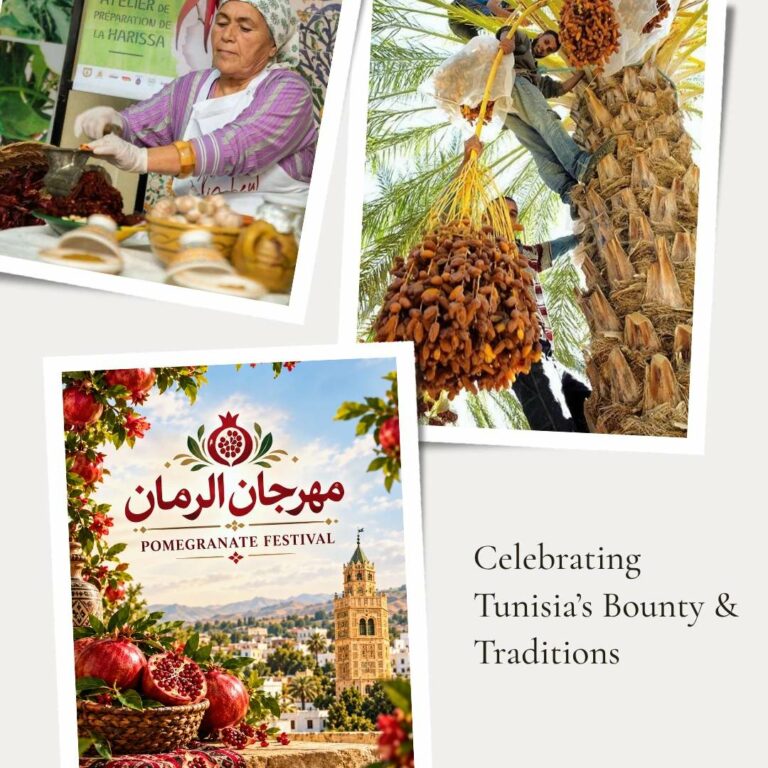
October is also a chance to discover some of Tunisia’s regional traditions through festivals and seasonal events. Rather than being limited to major tourist attractions, these celebrations offer an opportunity to experience local food, agricultural heritage, crafts, music, and traditions.
In Testour, the Pomegranate Festival celebrates one of the region’s characteristic agricultural products. The event brings together local products, culinary traditions, cultural activities, and the heritage of this town known for its Andalusian influence.
In Nabeul, the Harissa Festival highlights one of the most recognisable ingredients of Tunisian cuisine. Visitors can discover the production and culinary uses of harissa while experiencing local food traditions and activities connected with the region.
Kairouan is also associated with the National Makroud Festival, dedicated to the traditional pastry for which the city is particularly well known. The event provides an opportunity to discover the preparation, history, and cultural importance of makroud as part of Kairouan’s culinary heritage.
Further south, the date harvest brings a distinctly seasonal atmosphere to the oasis regions. The harvesting of dates, particularly Deglet Nour, is an important agricultural activity in the Tozeur and Kebili areas and offers visitors a glimpse into a traditional part of life in southern Tunisia.
Because festival dates and programmes can change from one edition to another, travellers should check the official information for the year of their visit before planning their itinerary around a specific event.
Enjoy Golf and Other Outdoor Leisure Activities
October’s generally more moderate temperatures can make it more comfortable to enjoy outdoor leisure activities. Golf is one option, with courses available across several regions of Tunisia. In Hammamet, golfers can choose between Golf Citrus and Yasmine Valley Golf Course. Around Tunis and Gammarth, options include Carthage Golf and The Residence Golf Course, while El Kantaoui Golf Course is located in Port El Kantaoui. Further along the coast, Monastir is home to Flamingo Golf Course and Palm Links Golf Course, while Tabarka Golf Course offers another option in the northwest. On Djerba, golfers can play at Djerba Golf Club.
Travellers can also consider other outdoor activities depending on the destination and weather conditions, including cycling, horseback riding, water sports, and nature excursions. In southern Tunisia, activities such as 4×4 excursions, trekking, and desert exploration can also be combined with visits to oases and other natural sites.
The advantage of planning these activities in October is not that the weather is guaranteed to be perfect, but that conditions are generally more manageable than during the hottest summer months, making longer periods outdoors more comfortable.
Can You Swim in Tunisia in October?
Swimming in Tunisia in October is still possible, particularly during warm, sunny days. However, conditions can vary depending on the weather, the coastal location, and the sea temperature. The Mediterranean remains relatively warm after the summer, but occasional cooler or rainy days can affect beach plans.
The following sections cover sea temperature in October and some of the best coastal areas for swimming during this time of year.
Sea Temperature in October
The sea temperature in Tunisia in October generally remains relatively warm after the summer, although it gradually becomes cooler as the month progresses. Along the Mediterranean coast, average seawater temperatures are typically around 22°C to 24°C, depending on the location. For example, averages are around 22°C in Tunis and about 23.7°C in Sousse and Port El Kantaoui, while Mahdia can reach around 23.8°C.
So, is the sea warm in Tunisia in October? For many travellers, yes. The water can still be comfortable for swimming, particularly on sunny and calm days. However, comfort is subjective, and some people may find temperatures around 22–23°C cool compared with the warmer sea conditions of July and August.
The sea is generally warmer at the beginning of October and gradually cools towards the end of the month. If swimming is an important part of your trip, choosing a coastal destination with favorable weather and checking local conditions during your stay can make a difference.
Best Places for Swimming in October
For travellers hoping to swim in October, the Tunisian coast offers several options, but conditions can vary from one part of the country to another. Coastal areas in the north, east, and southeast can all offer suitable conditions on warm and calm days, so the choice can depend on both the destination and the weather during your stay.
Mahdia is known for its sandy beaches and clear Mediterranean waters, while Monastir and Sousse offer a combination of beaches, seaside promenades, and easy access to other attractions. Further south, Djerba generally benefits from warmer conditions, making it another option for travellers looking to include swimming in their October itinerary.
For a quieter coastal experience, areas around Tabarka can also be considered, although the northern coast is more exposed to changing autumn weather. In October, it is therefore better to think in terms of favourable beach days rather than guaranteed swimming weather throughout the month.
If swimming is an important part of your holiday, it is worth checking the local forecast and sea conditions before heading to the beach.
What to Pack for Tunisia in October
October calls for a more flexible wardrobe than the summer months. Days can still be warm, particularly along the coast and in southern Tunisia, but temperatures can drop in the evening. What you pack should also depend on the regions you plan to visit, especially if your itinerary includes both coastal areas and the south.
What to Wear During the Day?
During the day, light and breathable clothing is usually the most practical choice. T-shirts, lightweight trousers, skirts, dresses, and comfortable shorts can work well when temperatures are warm. A hat, sunglasses, and sunscreen are also useful for spending time outdoors or sightseeing.
If you plan to visit medinas, mosques, or other cultural and religious sites, it is worth including some more modest clothing that covers the shoulders and knees. Comfortable walking shoes are also important, particularly if you plan to explore historic streets, archaeological sites, or natural areas.
For beach days, pack swimwear and a light cover-up. Even in October, sunny days can be warm enough to spend time by the sea.
What to Pack for Cooler Evenings
Evenings in October can feel noticeably cooler than the afternoon, particularly in northern and inland areas. A light jacket, cardigan, or sweater is therefore useful, even if you expect mostly warm weather during the day.
If you are travelling to the Sahara or southern Tunisia, consider bringing an additional layer for the evening. Desert temperatures can change more quickly after sunset, so a lightweight fleece or warmer sweater can be useful for outdoor activities and overnight stays.
A practical Tunisia October packing list could therefore include a mix of summer clothing, one or two warmer layers, comfortable shoes, sun protection, and a light rain jacket or compact umbrella in case of occasional autumn showers.
Tunisia in October: Practical Travel Tips
October can be a relatively flexible month for travelling around Tunisia, but a little planning can make the trip easier. From choosing when to book accommodation to deciding how to move between destinations, these practical considerations can help you organise your itinerary with fewer surprises.
Crowds and Prices in October
October generally falls outside Tunisia’s busiest summer period, so some coastal destinations can feel quieter than they do in July and August. This can make it easier to explore popular attractions, dine out, or spend time at the beach without the same level of summer activity.
Prices can also vary depending on the destination, accommodation, and exact travel dates. Tunisia October prices are not necessarily the same throughout the month, with differences possible between weekends, school holidays, and quieter periods. It is therefore worth comparing accommodation and transport options rather than assuming that October will always be cheaper.
How Far in Advance Should You Book?
How early you should book depends largely on your itinerary and where you plan to stay. For a simple city break or a flexible trip, booking a few weeks in advance may be sufficient. However, travellers visiting during school holidays or planning to stay at a specific hotel may benefit from booking earlier.
For all-inclusive holidays in Tunisia, advance booking can be particularly useful if you have specific dates, room requirements, or a preferred property. The same applies if your itinerary includes several destinations, as booking accommodation and transport in advance can make moving between regions easier.
What to Expect When Travelling Around Tunisia
Travelling around Tunisia can involve a mix of trains, buses, shared taxis, private transfers, and rental cars, depending on your route. Major cities and tourist areas are generally connected by public transport, while reaching smaller towns, rural areas, or desert locations may require additional planning.
For longer journeys, allow some flexibility in your schedule rather than planning every connection too tightly. If you are combining northern Tunisia, the coast, and the south in one trip, travel times can add up, so grouping nearby destinations together can make the itinerary more comfortable.
For travellers heading towards the desert, oases, or more remote areas, arranging transport in advance can also be helpful, particularly when joining an organised excursion or private tour.
Visiting Tunisia in October offers a pleasant balance between warm weather, more comfortable temperatures, and a wide variety of experiences. The coast can still provide sunny days and opportunities for swimming, while the milder conditions make it easier to explore historical sites, natural landscapes, oases, and the south.
Whether you are planning a beach holiday, a cultural getaway, or a trip combining several regions, October gives you the flexibility to experience Tunisia at a more relaxed pace. Just remember that conditions can vary between regions, so planning your itinerary and packing accordingly can make your trip more comfortable.
Ready to discover Tunisia this October? Open Tunisia can help you plan your trip, whether you are looking for accommodation, activities, excursions, or a tailor-made experience. Get in touch with our team to start planning your journey.
FAQ — Tunisia in October
1. Does it rain a lot in Tunisia in October?
October can bring occasional rain, particularly in northern and coastal areas, but rainfall is usually intermittent. The south is generally much drier.
2. Is Tunisia crowded in October?
October is generally quieter than the peak summer months. Popular tourist areas can still be busy, but the overall atmosphere is often more relaxed.
3. Is Tunisia expensive in October?
Prices vary depending on the destination, hotel, and travel dates. October can offer lower prices than the peak summer season, although this is not guaranteed for every hotel or period.
4. Is October a good time for a Sahara Desert tour?
October can be a suitable time for a Sahara trip because temperatures are generally more comfortable than during the summer. It is also possible to combine desert excursions with visits to oases and southern towns.
5. Is October a good month for a family holiday in Tunisia?
October can be suitable for families who want to combine sightseeing, outdoor activities, and beach time. The milder temperatures can also make travelling and exploring more comfortable than during the hottest summer months.
6. Is Tunisia warm at night in October?
Evenings can be mild but are generally cooler than daytime. Coastal and northern areas may feel noticeably cooler after sunset, while southern regions can remain warmer, so a light jacket or sweater is useful.